Inside the Creator's Studio: How Mantras Become Music
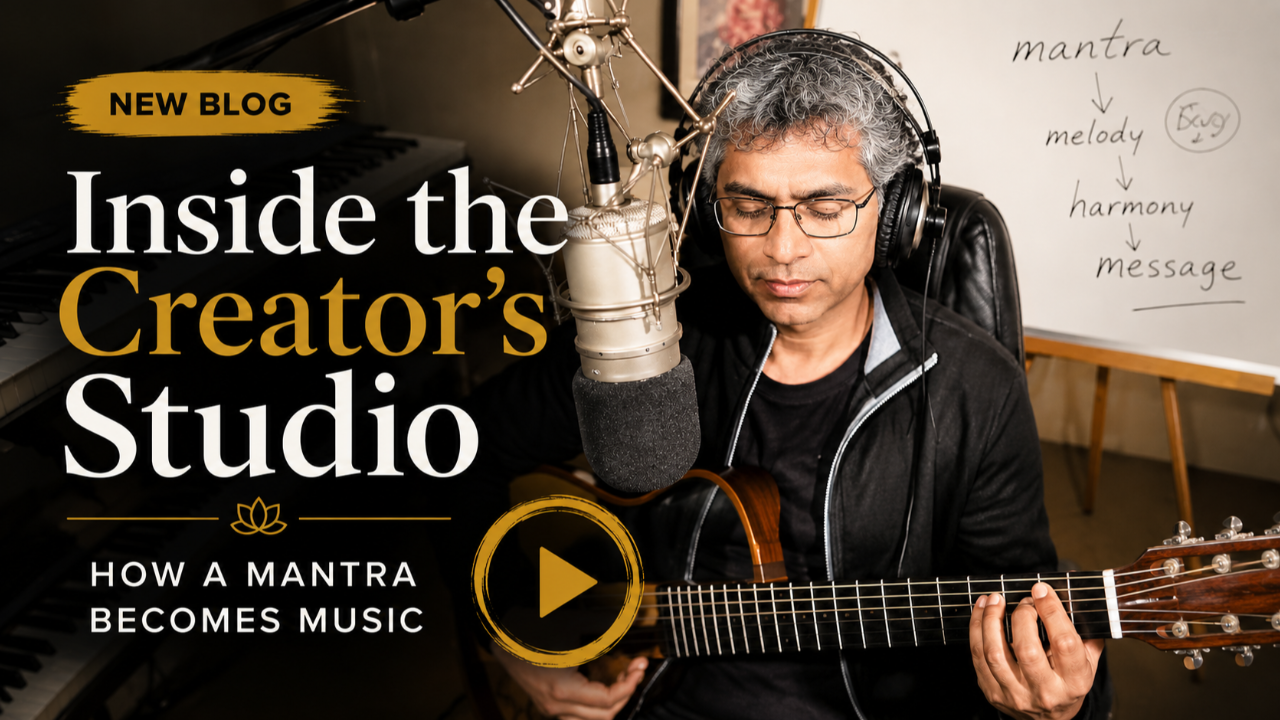
Most people encounter a mantra only after it has become a finished recording, a polished chant, or a sacred song. What is rarely seen is the creative journey that unfolds before the final version ever reaches the listener.
Recently, I shared a video called Inside the Creator’s Studio, drawn from one of the many exploratory sessions that eventually contributed to my recording of Lokah Samastah Sukhino Bhavantu. While the finished track may appear seamless and inevitable, the reality is that sacred music often emerges through a process of listening, experimentation, questioning, and discovery.
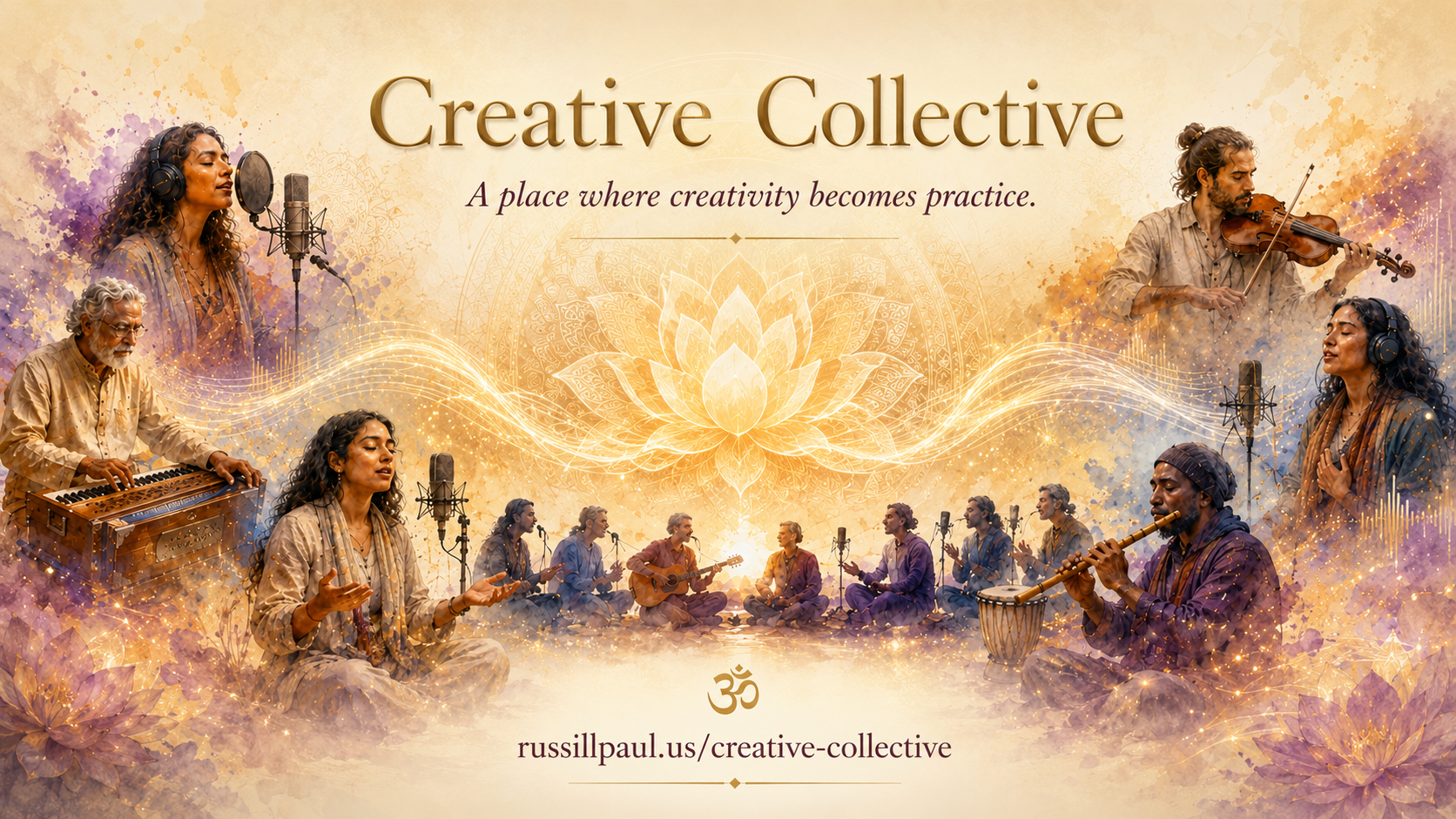
This creative process is one of the things we explore together in the Creative Collective.
Beyond Repetition: The Creative Life of Mantra
Many people think of mantra as something fixed and unchanging—a sacred formula to be repeated exactly as it has been handed down. While there is certainly a place for preserving traditional forms, there is another dimension that is often overlooked.
Once a mantra has been properly received, understood, and practiced, it begins to reveal creative possibilities.
Questions naturally arise:
- What happens when melody is introduced?
- How does rhythm influence the experience?
- How do pronunciation and musical phrasing work together?
- Can a mantra be arranged in a way that deepens its spiritual impact without compromising its integrity?
- What role does listening play in shaping the final expression?
These are not merely artistic questions. They are spiritual questions as well.
The Yoga of Sound teaches that sound, consciousness, and creativity are deeply interconnected. The way we listen influences the way we create. The way we create influences the way we perceive. Over time, creativity itself becomes a form of practice.
The Studio as a Laboratory of Consciousness
When I sit in the studio, I am rarely trying to "produce a song."
More often, I am exploring a relationship.
A relationship between mantra and melody.
Between silence and sound.
Between inspiration and discipline.
Between tradition and innovation.
Some experiments fail. Others reveal something unexpected. Occasionally, a small musical idea opens a doorway that eventually becomes part of a recording shared with thousands of people.
The process requires patience. It requires listening. It requires a willingness to enter the unknown without knowing exactly where the journey will lead.
In this sense, the studio becomes more than a recording environment. It becomes a laboratory of consciousness.
Why Creativity Matters on the Spiritual Path
Many spiritual practitioners separate creativity from practice.
They meditate.
They chant.
They study.
But creativity is placed in a different category altogether.
My experience has been quite different.
Creativity can become one of the most profound expressions of spiritual life when it arises from a deeper place within us. Whether through music, writing, art, teaching, movement, or problem-solving, creativity invites us into a living relationship with inspiration.
It teaches us to listen more carefully.
To trust intuition.
To remain open to possibilities we cannot yet see.
And perhaps most importantly, it reminds us that transformation is not always achieved through effort alone. Sometimes it emerges through participation in a creative process larger than ourselves.
The Purpose of the Creative Collective
The Creative Collective was created to provide a space for this kind of exploration.
It is not simply a music group.
Nor is it limited to musicians.
It is a gathering place for those who are interested in the intersection of spirituality, creativity, sound, and conscious living.
Together we explore:
- The creative dimensions of mantra and sacred sound
- Music as spiritual practice
- The relationship between listening and awareness
- Creative projects and works in progress
- The processes that shape recordings, teachings, and publications
- Inspiration, experimentation, and discovery
Sometimes we focus on music. Sometimes we explore broader creative questions. At other times, we simply witness and support one another's unfolding process.
An Invitation
Every finished recording has a hidden story.
Every teaching has a journey behind it.
Every creative work begins with questions that have not yet found their answers.
The Inside the Creator’s Studio series offers a glimpse into that hidden world—not because the process is more important than the result, but because the process itself contains valuable lessons.
If you have ever wondered how mantra becomes music, how inspiration becomes form, or how creativity can become a genuine spiritual practice, I invite you to join us.
The Creative Collective is where these explorations continue.
Get started on the Creative Collective
russillpaul.us/collective
Creativity is not separate from the spiritual path. At its deepest level, it is one of the ways consciousness learns to express itself through us. — Russill Paul
Author-Educator and Musician-Producer

Russill Paul
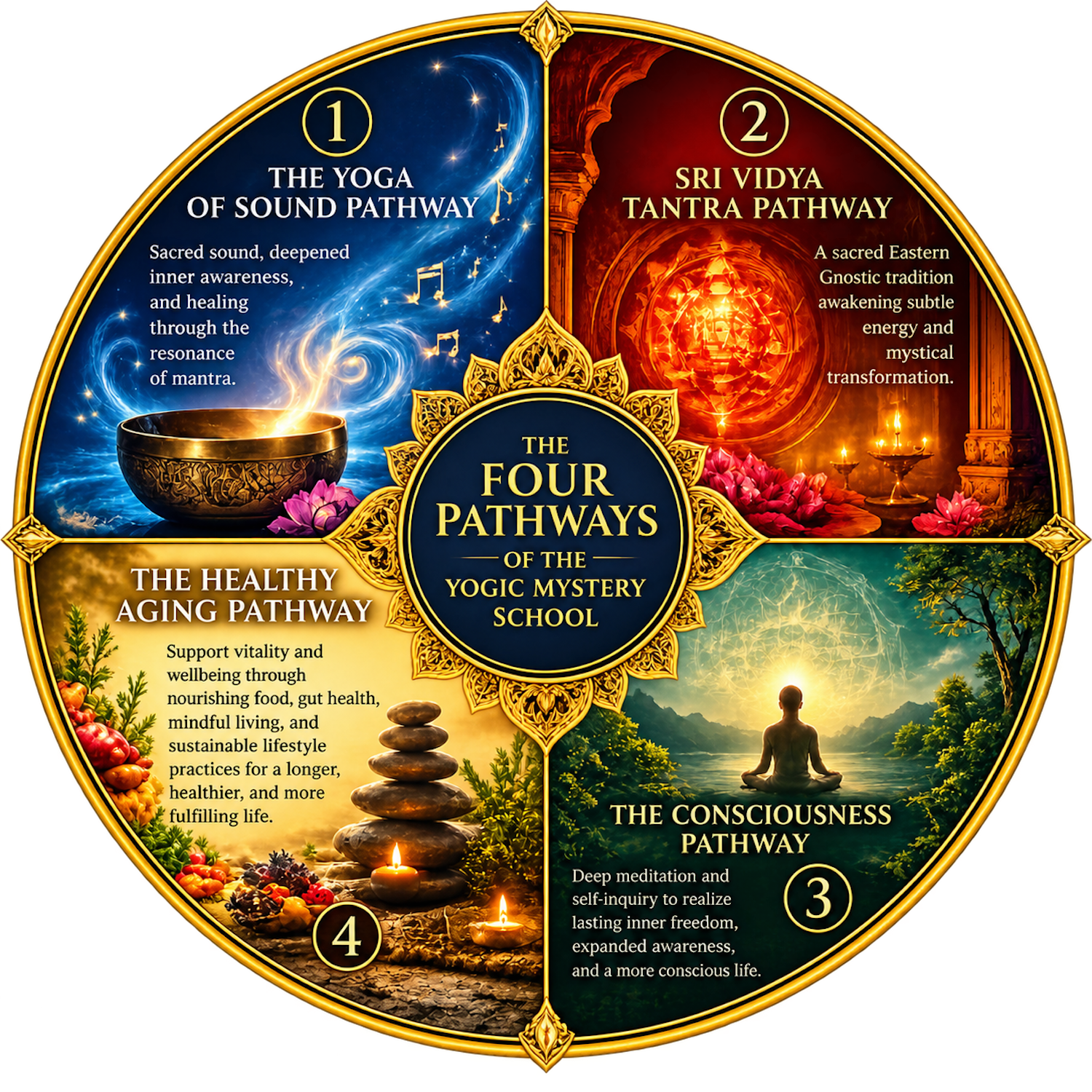
Russill Paul is the author of The Yoga of Sound: Tapping The Hidden Power of Music and Chant and co-founder of Yogic Mystery School with his wife, Asha, an integrative health coach. He teaches internationally and online. They live in Austin, Texas.
Our New Cooking Club!
Develop a sacred kitchen as you also learn healthy recipes and healthy cooking methods.

Asha Paul is an educator, author, coach, and passionate cook who is deeply committed to promoting health and well-being. Passionate about helping others feel their best and age gracefully, she shares her knowledge through online teaching. Asha resides in Austin, Texas, with her husband, Russill.