External Sound To The Internal Mantra
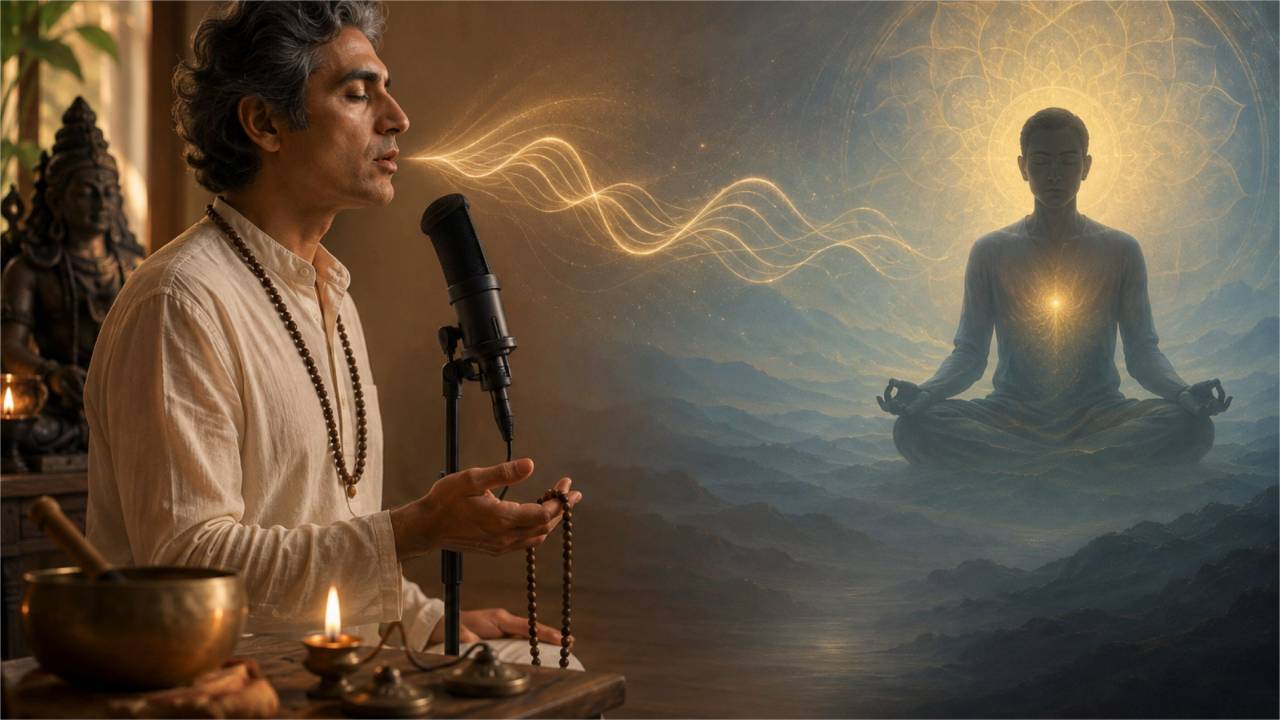
Why the Voice Matters in Mantra Practice
There is a natural tendency, particularly as our spiritual practice matures, to value what is internal over what is external. Silence seems deeper than sound. Mental repetition seems subtler than vocal repetition. We may therefore assume that repeating a mantra silently in the mind represents a more advanced form of practice than saying it aloud.
There is certainly truth in this. When we become quiet and still, we begin working more directly with the subtle vibrations of thought, imagination, memory, and intention. Mental repetition—japa—can become an extraordinarily powerful means of gathering the mind and directing consciousness.
But there is another side to this that deserves our attention.
What exactly are we hearing when we repeat a mantra internally?
For most of us, it is not an abstract or disembodied sound. We have internalized a voice. And very often, that voice is our own.
This is why external mantra practice can play such an important role in developing internal practice. The mantra we cultivate through the voice becomes part of the vocabulary of vibration available to us when we become silent.
Your External Voice Educates Your Internal Voice
Consider what happens when you learn a piece of music.
At first, you may have only a rough sense of the melody. You sing it repeatedly. You listen more carefully. Perhaps you discover that a note you thought you knew is slightly different. Your phrasing becomes more natural. Your pitch improves. Eventually, you no longer need an external recording because the music has become established within you.
Something similar can happen with mantra.
When we chant aloud, we are not merely producing sound for the duration of the practice. We are teaching the mind what the mantra sounds like. Through repetition, the sonic form of the mantra becomes increasingly familiar and increasingly available to consciousness.
This is one reason I encourage students not simply to move toward silent repetition as quickly as possible, but to cultivate the external recitation itself.
Say the mantra aloud. Hear yourself saying it. Improve the way you say it. And then gradually take what you have cultivated externally into the internal space.
In the accompanying video, I describe this movement from external to internal practice and why I consider it so important.
A Mantra Is More Than a Collection of Words
This brings us to something fundamental in the Yoga of Sound.
A mantra is not merely a sentence carrying a spiritual meaning.
If that were the case, understanding the translation and repeating the words with sincerity might be sufficient. But Mantrashastra—the traditional science of mantra—places considerable importance upon sound itself.
The vibration matters.
This does not mean that intention, sincerity or devotion are unimportant. Quite the opposite. They can profoundly affect our experience of practice. But they are not the only variables involved.
There is the mantra itself.
There is our intention in using it.
And there is the actual vibration we produce when we utter it.
These three things can work together.
This is where pronunciation becomes more than linguistic correctness. When working with Sanskrit mantra, pronunciation concerns the physical formation of sound: where a consonant occurs in the mouth, how a vowel is shaped, how long a sound is sustained, how syllables relate to one another, and how the natural sonic character of the mantra is preserved.
The purpose is not perfectionism.
The purpose is greater fidelity to the vibration we are attempting to internalize.
EXPLORE FOUNDATIONAL COURSES IN MANTRA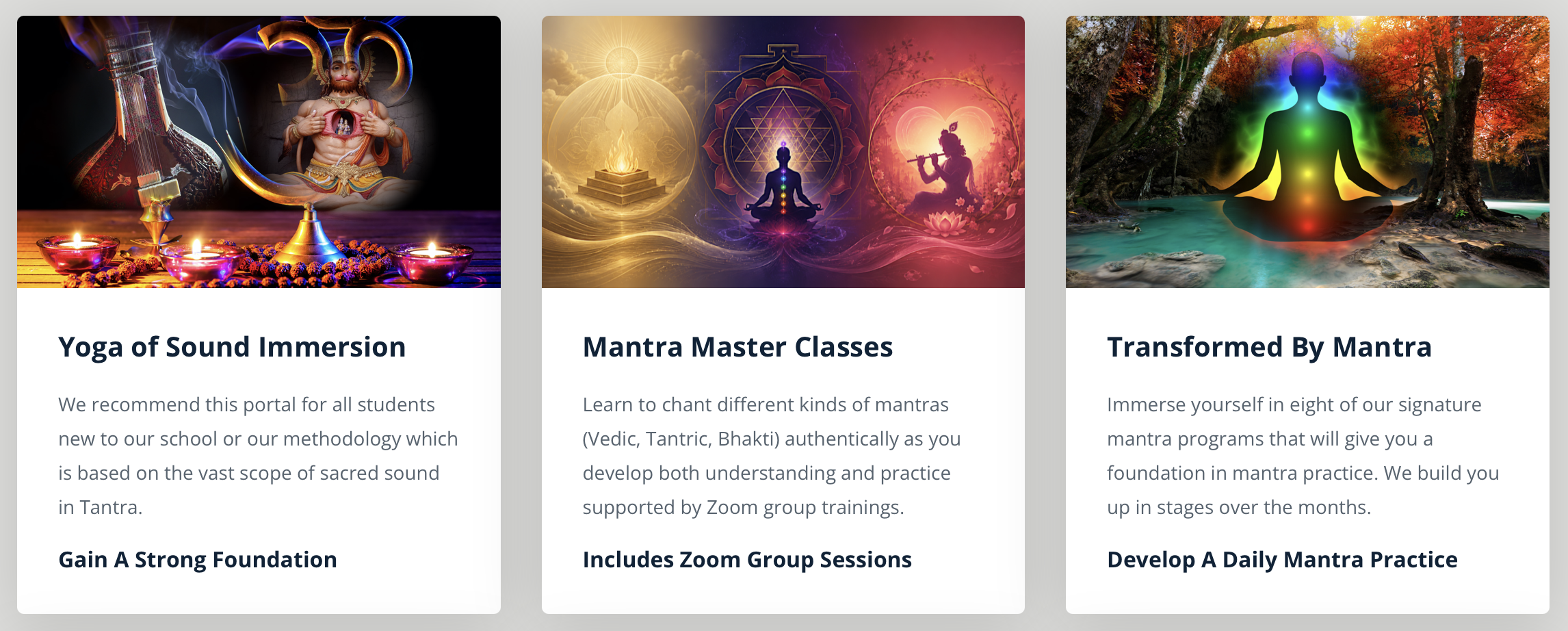
Why Anglicizing a Mantra Changes the Experience
Those of us who speak English naturally bring the habits of English into other languages.
We do this unconsciously. The mouth, tongue and breath have developed familiar pathways. When we encounter Sanskrit, we therefore tend to reshape unfamiliar sounds into familiar ones.
The result may still be recognizable as the mantra. It may still be devotional. It may still be spiritually meaningful.
But it is not necessarily producing the same vibration.
This distinction becomes particularly important when mantra is practiced over long periods of time. If a mantra becomes a core practice—something we repeat hundreds or thousands of times—the sonic habits we establish become deeply reinforced.
We are not simply repeating the mantra.
We are repeatedly training ourselves in a particular way of hearing it.
That is why improvement can remain part of mantra practice even after we have practiced for many years.
A mantra need not become “same old, same old.” Its pronunciation can become more refined. Its resonance can deepen. Our sensitivity to its vowels and consonants can increase. Breath can become more integrated with sound. The voice itself can become increasingly capable of transmitting what we are attempting to invoke.
External practice can therefore continue educating internal practice.
Building an Inner Resource
There is another reason this matters.
When we enter deeply into ourselves, we do not necessarily encounter silence.
We encounter thoughts.
Memories.
Imagined conversations.
Desires.
Fears.
Plans.
Reactions.
Fragments of language and images can all compete for our attention. Anyone who has seriously attempted meditation knows how active the internal world can be.
Mantra introduces another vibration into this environment.
But the strength of that resource depends partly upon what we have cultivated.
Suppose you have spent months working carefully with a mantra aloud—listening to it, feeling it in the body, refining its pronunciation, allowing the breath to support it, and developing a relationship with its vibration.
When you subsequently become silent, you have something substantial to draw upon.
You can hear the mantra inwardly because you know it outwardly.
You can invoke its rhythm because your body has practiced that rhythm.
You can feel something of its resonance because you have repeatedly created that resonance through your own voice.
The external practice has helped establish an inner sonic resource.
This is considerably different from trying to suppress thought through sheer willpower.
Instead of fighting one thought with another thought, we introduce into consciousness a vibration that has been deliberately cultivated through practice.
EXPLORE ENHANCED COURSES IN MANTRA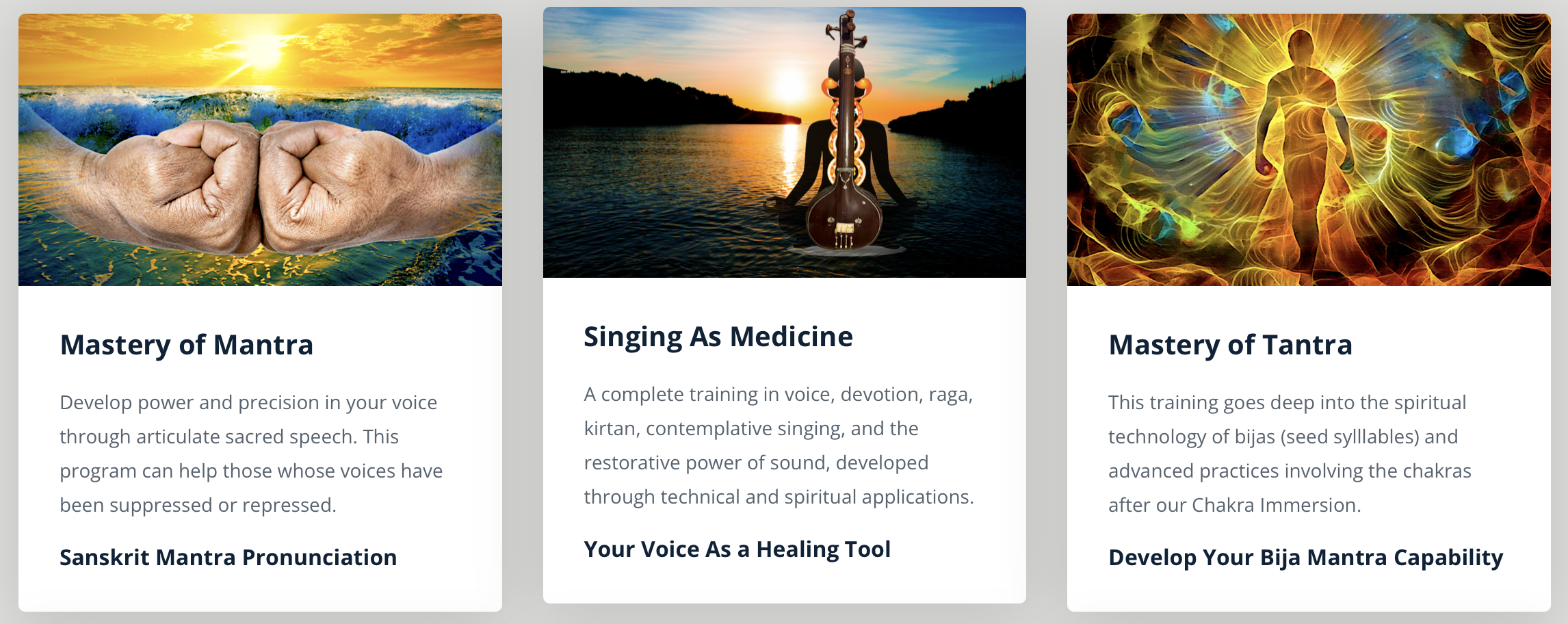
Your Own Voice Is Important
Recordings can be enormously helpful in learning mantra. A skilled teacher or chanter can provide pronunciation, pitch, rhythm and phrasing that we might not discover ourselves.
But eventually something has to cross over.
The teacher's voice has to become your voice.
This is particularly important because, when you are alone and silent, you are not relying upon the finest mantra chanter you have heard on a recording. You are drawing upon what your own mind and body have learned.
The goal, therefore, is not to imitate another person's voice indefinitely.
It is to educate your own.
There is something profoundly personal about this.
Your voice carries your breath. Your history. Your nervous system. Your emotional life. Your longing. Your devotion. Your imperfections. And your capacity for transformation.
When you work carefully with mantra through your own voice, the practice begins to inhabit all of this.
Eventually, when the audible voice becomes quiet, its work can continue internally.
External and Internal Are Not Opposites
Perhaps we can therefore reconsider the familiar hierarchy in which external practice is regarded as elementary and internal practice as advanced.
They can instead be understood as parts of a continuum.
We sound the mantra.
We listen.
We refine.
We repeat.
We internalize.
Then we return to the voice and discover something more.
Over time there can be a continual movement between sound and silence, voice and mind, external vibration and internal awareness.
The external teaches the internal.
And the internal, in turn, can make us more sensitive when we return to external sound.
This reciprocal movement is one of the reasons mantra practice can continue developing rather than becoming mechanical.
EXPLORE ADVANCED COURSES IN MANTRA
A Simple Experiment for Your Practice
You can explore this without changing your mantra or creating an elaborate new practice.
Take whatever mantra you are presently using.
For several minutes, say it aloud.
But instead of concentrating primarily on the number of repetitions, listen to yourself.
Notice the vowels. Notice the consonants. Notice where the mantra feels natural and where you may be imposing the habits of ordinary English speech upon it.
Then become quieter.
You might gradually reduce the volume until the mantra is barely audible. Eventually allow the external sound to cease altogether.
Continue the mantra mentally.
And ask yourself:
What am I actually hearing inside?
Can you still hear something of the vibration you were creating aloud?
Can you feel the relationship between your external and internal voice?
Don't force an experience. Simply become interested in the transition.
Over time, this movement from external to internal practice can become extraordinarily subtle.
The aim is not merely to become better at pronouncing Sanskrit. Nor is it to turn spiritual practice into a technical exercise.
It is to develop increasingly refined resources for working with consciousness.
Because when the outer voice becomes silent, the mantra does not necessarily disappear.
It can become the voice with which we meet ourselves within.
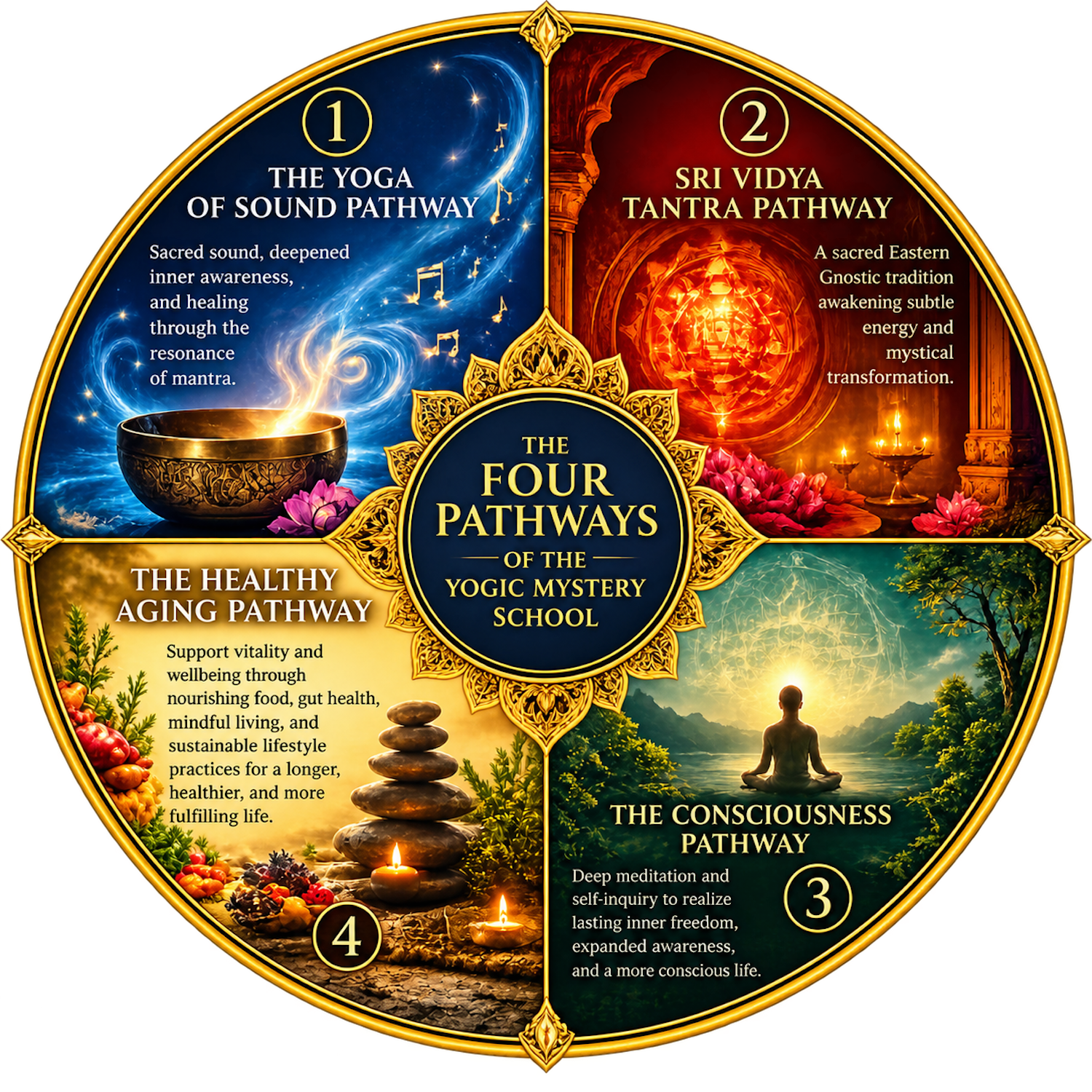

Author-Educator and Musician-Producer

Russill Paul
Russill Paul is the author of The Yoga of Sound: Tapping The Hidden Power of Music and Chant and co-founder of Yogic Mystery School with his wife, Asha, an integrative health coach. He teaches internationally and online. They live in Austin, Texas.
Our New Cooking Club!
Develop a sacred kitchen as you also learn healthy recipes and healthy cooking methods.

Asha Paul is an educator, author, coach, and passionate cook who is deeply committed to promoting health and well-being. Passionate about helping others feel their best and age gracefully, she shares her knowledge through online teaching. Asha resides in Austin, Texas, with her husband, Russill.