CREATIVE COLLECTIVE
External Sound To The Internal Mantra
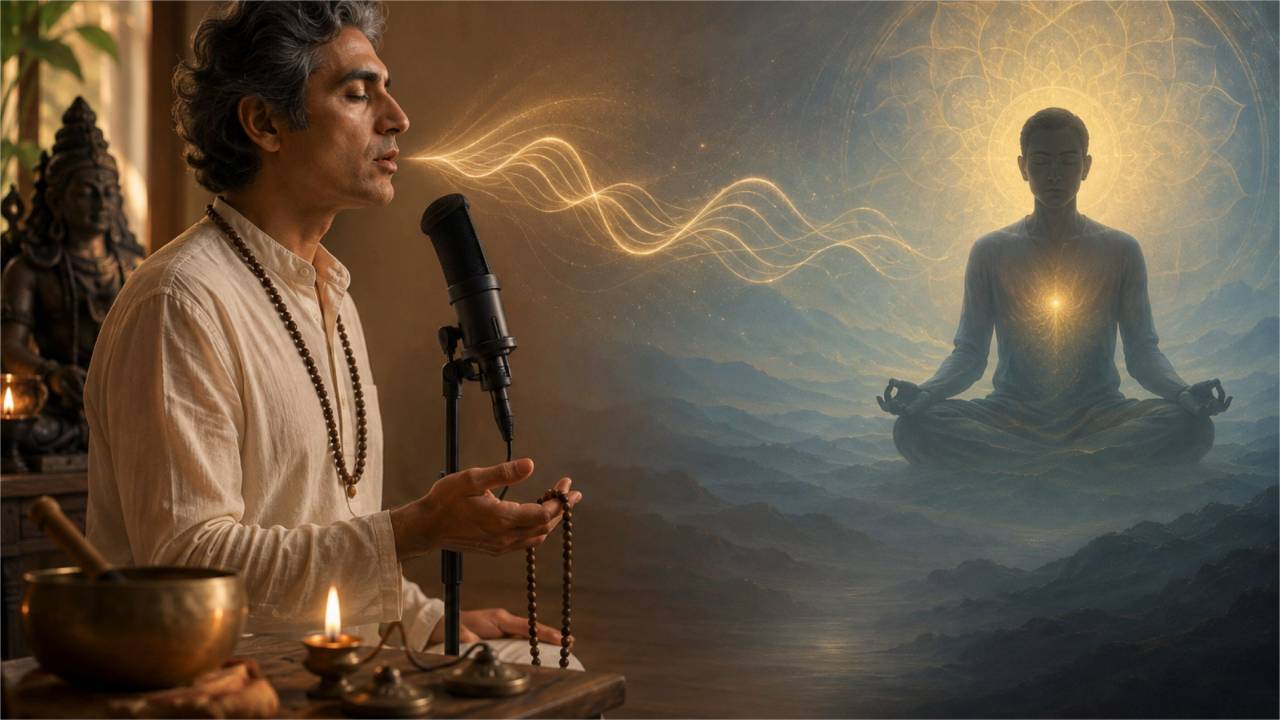
Why the Voice Matters in Mantra Practice
There is a natural tendency, particularly as our spiritual practice matures, to value what is internal over what is external. Silence seems deeper than sound. Mental repetition seems subtler than vocal repetition. We may therefore assume that repeating a mantra silently in the mind represents a more advanced form of practice than saying it aloud.
There is certainly truth in this. When we become quiet and still, we begin working more directly with the subtle vibrations of thought, imagination, memory, and intention. Mental repetition—japa—can become an extraordinarily powerful means of gathering the mind and directing consciousness.
But there is another side to this that deserves our attention.
What exactly are we hearing when we repeat a mantra internally?
For most of us, it is not an abstract or disembodied sound. We have internalized a voice. And very often, that voice is our own.
This is why external mantra practice can play such an ...
The Functional Value of Mantra Types
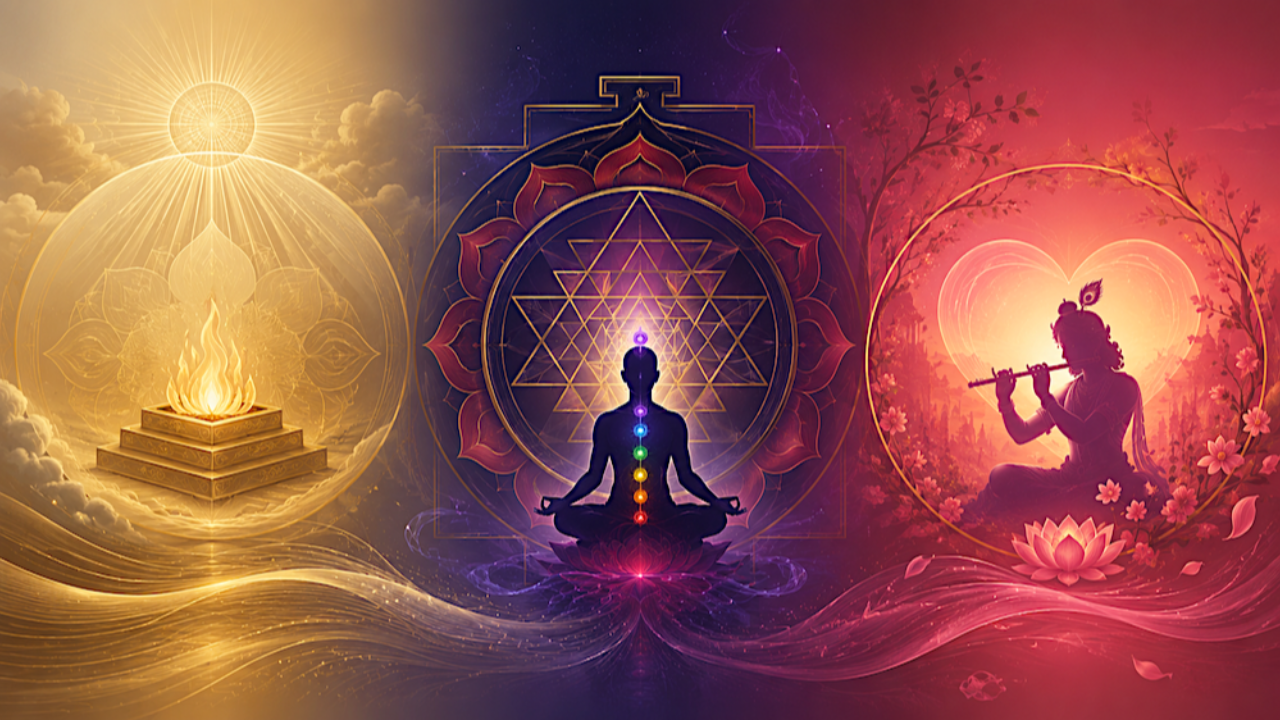
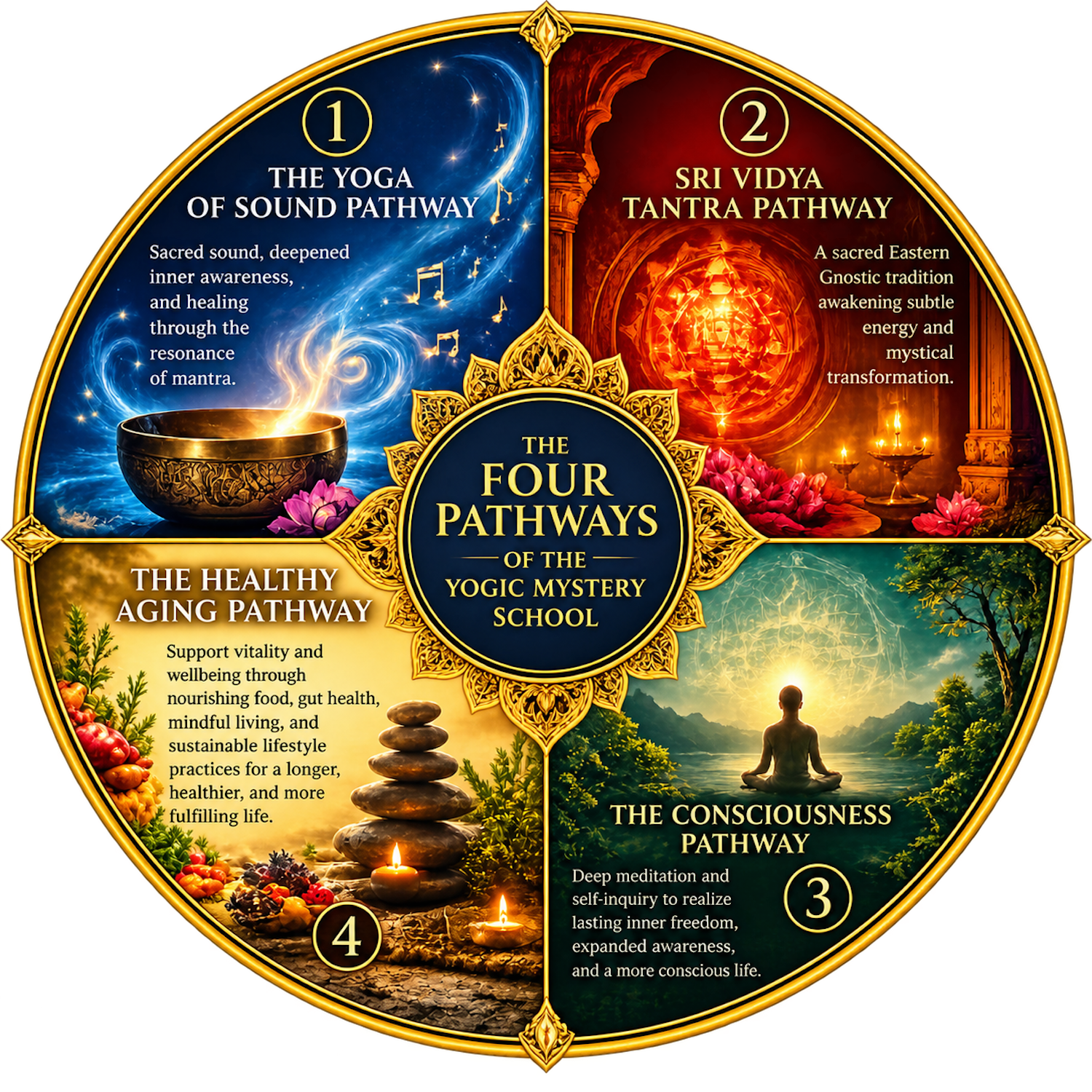
Most people think of mantra as a single practice—a sacred phrase repeated in meditation, prayer, or yoga. Yet within the authentic Yoga of Sound tradition, mantra is far more nuanced. Just as different medicines serve different purposes, different mantras awaken different dimensions of our being.
Three Paths, Three Functions
In the Yogic Mystery School, we study three primary streams of mantra: Vedic, Tantric, and Bhakti. Each has its own purpose, method, and transformational effect. Learning to recognize these distinctions can completely change the way you experience mantra practice.
Vedic Mantras: Aligning with Higher Consciousness
Vedic mantras are among humanity's oldest sacred sounds. Traditionally chanted with precise tonal patterns, they are designed to align the individual with cosmic intelligence and universal order.
Rather than expressing emotion, Vedic mantras cultivate clarity, steadiness, and higher awareness. They invite us beyond the personal mind into a state of pr...
The Living Field of Raga: Singing as Meditation
There is a way of singing that is not performance.
I often call it “Singing For God.”
This reflects its origins in Carnatic music, where composers sang in the temples of India—the very places we visited on pilgrimage.
At the same time, I understand that the word “God” can create distance for some.
So there is another way of entering this same process—
one that focuses on the inner experience that arises through musical knowledge and technique.
This is what I mean by Singing As Meditation.
It is not about becoming a better singer.
It is about becoming transparent enough
for something deeper to move through the voice.
It is a way of entering.
A way of allowing sound to shape consciousness
rather than using sound to convey something outward.
What Happens When Singing Becomes Meditation
When singing is combined with spiritual practice,
something begins to shift.
You are no longer “producing” sound.
You are participating in it.
And in that participation:
- Breath begins to orga ...
Concurrent Dimensions In Singing

In recent Yoga of Sound trainings, we've discussed the three dimensions of our Singing As Meditation process: the aesthetic, the therapeutic and the spiritual. If we focus excessively on the technical aspects, we risk compromising the aesthetic component. It may not sound beautiful if it’s too technical. Conversely, if you aim for aesthetics without the necessary technique, the beauty won’t be embodied properly, leading to a loss of aesthetic quality. It might be conceptually great, but poor technique means it won’t be beautiful; it will just be technically sound without any beauty.
Now, what about the third component—spiritual depth and connection? As we look at aesthetics and technique, it’s crucial to realize that even if something sounds beautiful and technically correct, it can still lack spiritual depth. Many people mistakenly believe that technical and musical excellence automatically equates to spirituality. I’ve come to understand that this is not the case after 40 years of e...
Chanting To Calm The Monday Effect

Recent evidence suggests that heart attacks are more common on Mondays; however, this effect is modest, as most heart attacks still occur on other days. More concerning is the fact that today, women—over 60 million Americans—are more susceptible to cardiovascular diseases than men.
What I want to offer you today is a form of prayer that can help you ease into your Monday. This type of prayer involves chanting, which is a traditional practice. Since chanting has a proven track record of improving circulation and can help manage blood pressure and stress, it serves as a valuable tool for wellness and self-care.
In Hindu astrology, Monday is known as Soma Vāra, which means "moon day," as it is associated with the moon. Lord Shiva is also linked to the moon; one of his epithets is Chandra Śekhara, meaning "the one who wears the moon in his hair." Meditating on Shiva on Mondays can promote calmness, emotional balance, and personal growth.
The set of mantras chanted for you in the medita...
Healing Light Of Rama (Meditation)
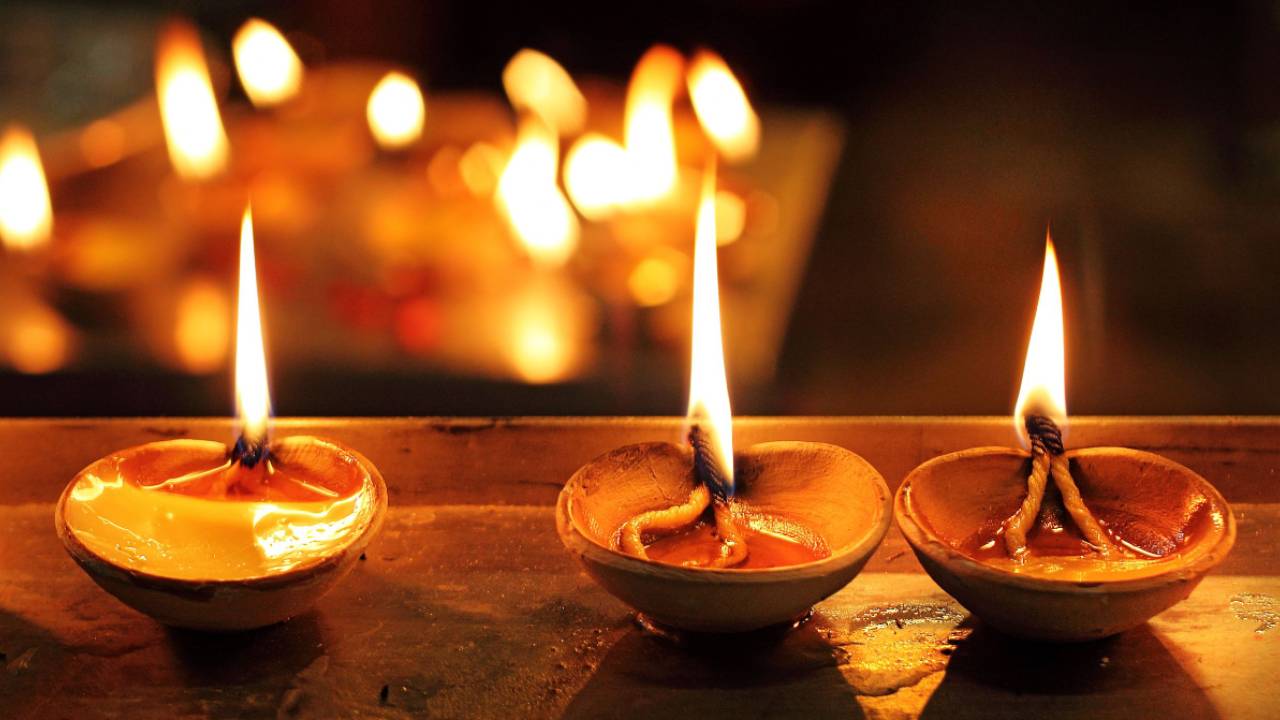
This Diwali, I would like to offer you something special: an audio-visual meditation that reflects on the healing energy associated with Lord Rama. He is not only a central figure in the festival of Diwali but also one of the most revered deities in Hinduism.
In the blog below the meditation, I share the significance of Diwali and its connection to Rama, who has greatly influenced my life and consciousness.
Asha and I were born and raised in our native state of Tamil Nadu, India. Diwali was one of the most special times of the year for us. My childhood was spent living in an orthodox Hindu neighborhood and attending a Hindu school and where I knew only Hindu friends. Like many Hindu children, I grew up reading Amar Chitra Katha, a comic book series that conveys Hindu spirituality, culture, and history through art and text.
In the tradition of the Ramayana—one of Hinduism's two main epics known as ithihasa—Diwali commemorates the return of Lord Rama to his kingdom of Ayodhya, alon...
The Benefits Of Singing As Meditation

Singing as Meditation is one of the new tracks in our Yogic Mystery School annual theme, which is Fit Body Mindful Soul. Singing has benefits that are physiological, psychological, and spiritual.
Apart from the obvious spiritual benefits of singing Hindu devotional music, which results in elevated states of consciousness, our practice is exploring the connection between musical sound and our overall health, encompassing both physical and psychological aspects. I believe there’s a significant correlation between the two.
The significant impact of music on health and psychology is not only documented in thousands of years of the Yoga of Sound's development, but also from the contemporary work of Oliver Sacks and the earlier contributions of Don Campbell and Alfred E. Tomatis.
The following insights were shared impromptu when students started to arrive for the session and shared what they were planning to do during the session. You are welcome to listen to actual exchanges in the video...
Singing As Meditation

Indian music is essentially vertical in nature, meaning that it is internal and reflective of a drawing inward. Like the Eastern culture and religion, it is introverted. Eastern religions emphasize the importance of introspection and self-discovery, encouraging individuals to explore the inner reality and mystery of their being. Eastern music facilitates this process.
The power and beauty of this vertical music lie in melody, which is the relationship of successive notes. Melody is a means of connecting the human with the Divine. It operates through the psychic levels of an intermediate world that is difficult to define, as it transcends the boundaries of everyday existence and consciousness. It is a world of the unconscious, of dreams and deep moods, images and sounds, of the inner senses—those mystical dimensions of the human psyche that are either overdeveloped or underdeveloped in most of us.
Indian music, and all contemplative music, strives to balance these dimensions as it u...
The Voice And Its Preciousness

The human voice, a truly unique instrument, has always fascinated me. Its preciousness, however, became even more apparent in the face of the widespread violence and bloodshed that plague our world today.
Did you know hearing is among the first human faculties to develop in the womb? And hearing is postulated to be among the last of our senses to leave us as we die? Hearing leads to the development of our voices. If our eyes are the gateways to our souls, could our voices be their bodies? In all their diversity, our voices are the universal embodiment of our souls.
The human voice, a unique blessing of life, characterizes our aliveness. The voice can express itself through the body and be heard through the ears, a manifestation of sound moving in the air medium. This aliveness of sound sets the human voice apart from all other sounds, making it a truly extraordinary instrument.
Unlike the mechanical sounds emitted from electronic music synthesizers or everyday equipment, the human v...
Learn A Mantra For Healing
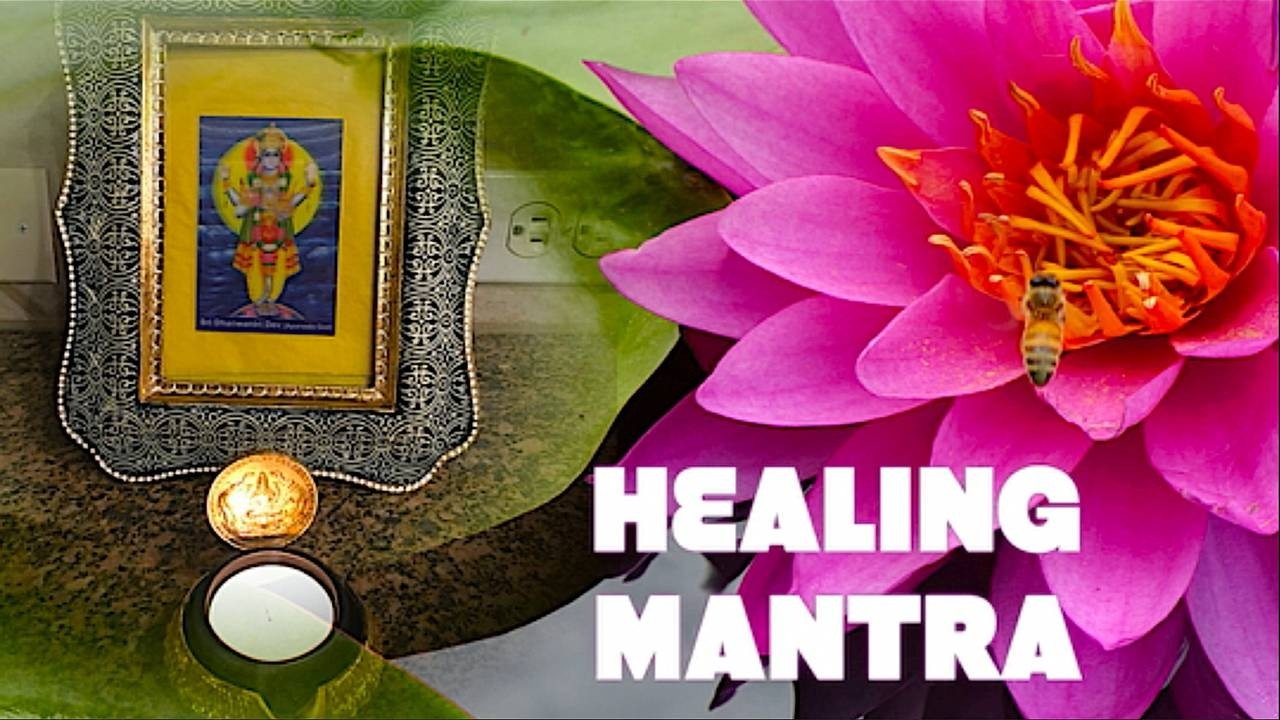
We can use any mantra for healing. However, understanding a mantra and, more importantly, cultivating a relationship with the power or intelligence behind the mantra can further the healing process.
Where does one begin with mantras and healing?
One way is to invoke the God of Healing: Dhanvantari.
Here are two variations:
om namo dhanvantaraye
or
om dhanvantaraye namaha
Learn more about sacred sound
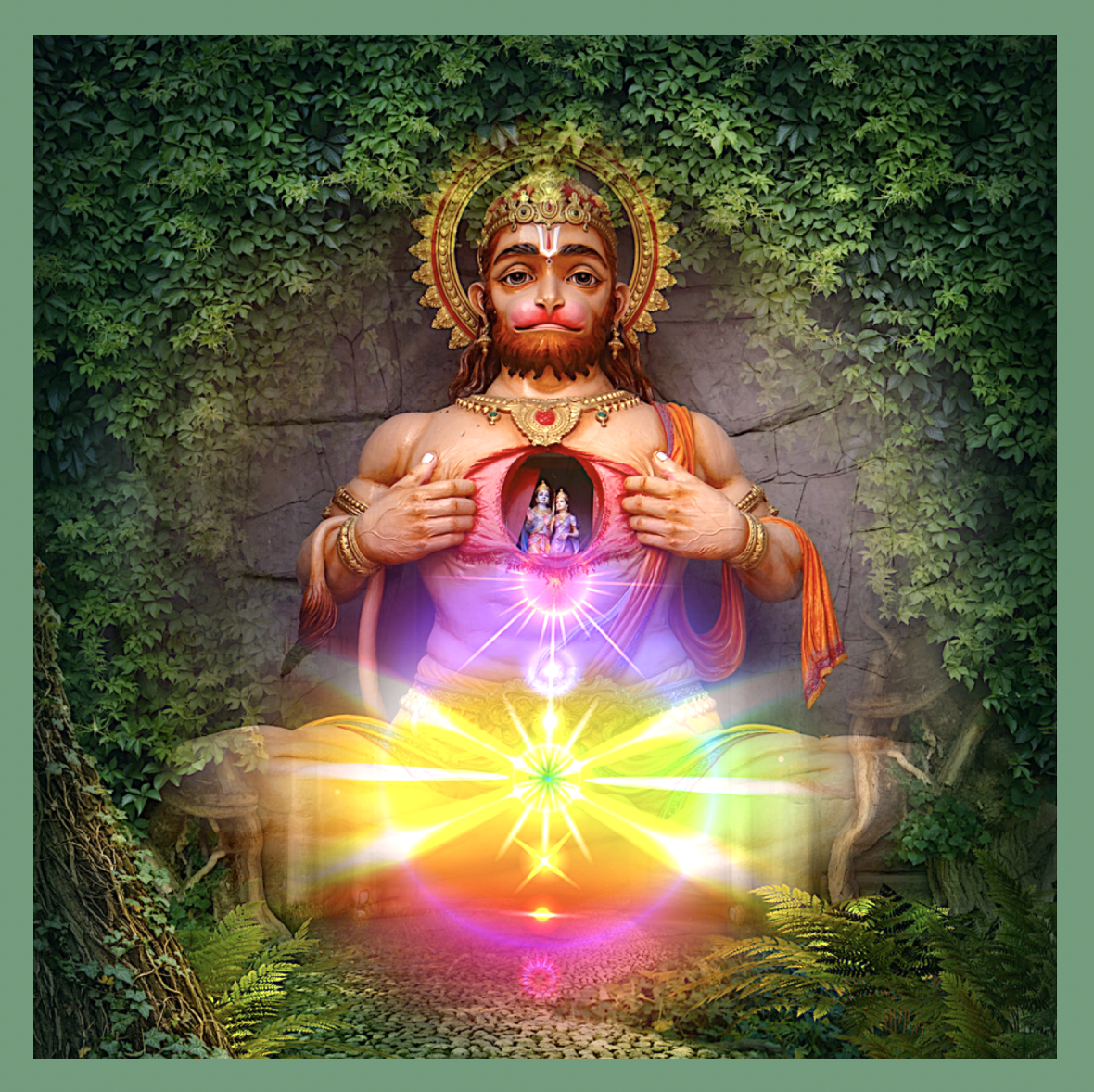
In the video below, I share the pronunciation for this mantra for healing along with some chanting and other information.
Below the video, you will find reflections to help deepen your mantra practice around healing along with some questions for journaling.
Click the play button on the video below:
Questions for journaling and reflection:
When we need healing, we follow directions. What's the mantra for healing, we ask. Someone gives us a mantra, and we say it with faith.
What is it then that heals us: our faith or the mantra? Is the mantra a vehicle for our faith? Or is our fa...
Author-Educator and Musician-Producer

Russill Paul
Russill Paul is the author of The Yoga of Sound: Tapping The Hidden Power of Music and Chant and co-founder of Yogic Mystery School with his wife, Asha, an integrative health coach. He teaches internationally and online. They live in Austin, Texas.
Our New Cooking Club!
Develop a sacred kitchen as you also learn healthy recipes and healthy cooking methods.

Asha Paul is an educator, author, coach, and passionate cook who is deeply committed to promoting health and well-being. Passionate about helping others feel their best and age gracefully, she shares her knowledge through online teaching. Asha resides in Austin, Texas, with her husband, Russill.