CREATIVE COLLECTIVE
The Living Field of Raga: Singing as Meditation
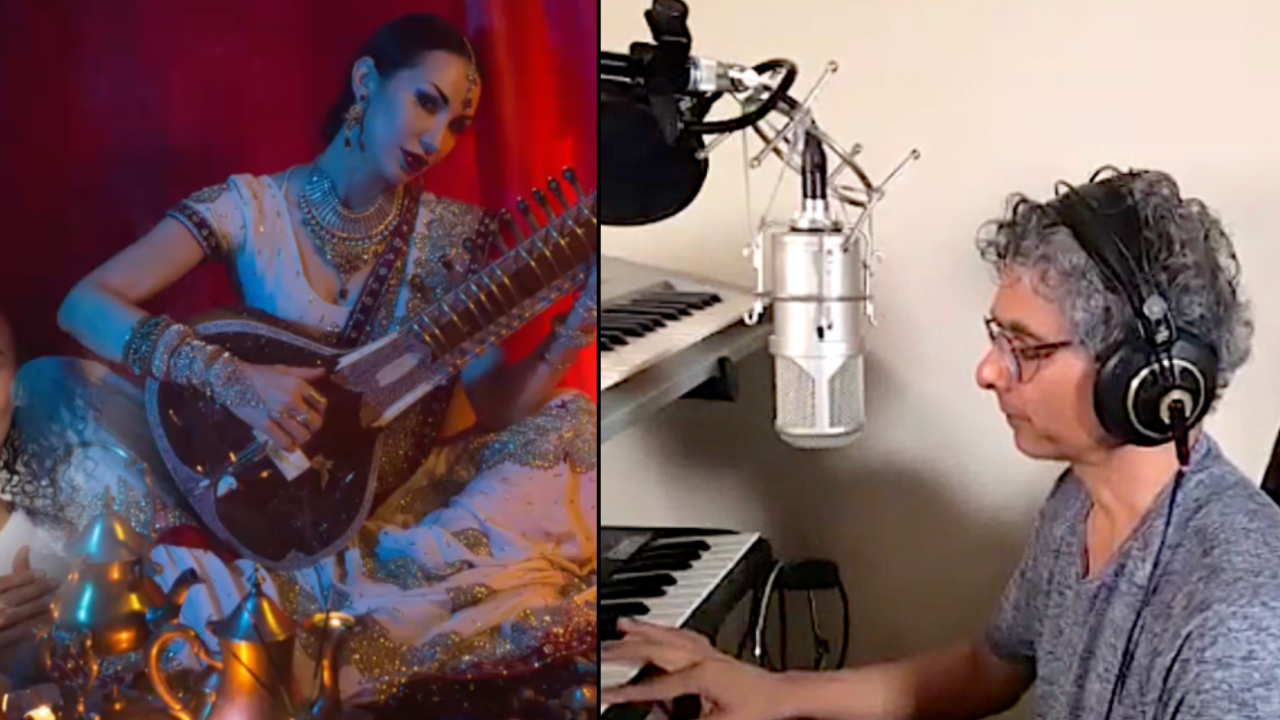
There is a way of singing that is not performance.
I often call it “Singing For God.”
This reflects its origins in Carnatic music, where composers sang in the temples of India—the very places we visited on pilgrimage.
At the same time, I understand that the word “God” can create distance for some.
So there is another way of entering this same process—
one that focuses on the inner experience that arises through musical knowledge and technique.
This is what I mean by Singing As Meditation.
It is not about becoming a better singer.
It is about becoming transparent enough
for something deeper to move through the voice.
It is a way of entering.
A way of allowing sound to shape consciousness
rather than using sound to convey something outward.
What Happens When Singing Becomes Meditation
When singing is combined with spiritual practice,
something begins to shift.
You are no longer “producing” sound.
You are participating in it.
And in that participation:
- Breath begins to orga ...
Concurrent Dimensions In Singing

In recent Yoga of Sound trainings, we've discussed the three dimensions of our Singing As Meditation process: the aesthetic, the therapeutic and the spiritual. If we focus excessively on the technical aspects, we risk compromising the aesthetic component. It may not sound beautiful if it’s too technical. Conversely, if you aim for aesthetics without the necessary technique, the beauty won’t be embodied properly, leading to a loss of aesthetic quality. It might be conceptually great, but poor technique means it won’t be beautiful; it will just be technically sound without any beauty.
Now, what about the third component—spiritual depth and connection? As we look at aesthetics and technique, it’s crucial to realize that even if something sounds beautiful and technically correct, it can still lack spiritual depth. Many people mistakenly believe that technical and musical excellence automatically equates to spirituality. I’ve come to understand that this is not the case after 40 years of e...
The Benefits Of Singing As Meditation

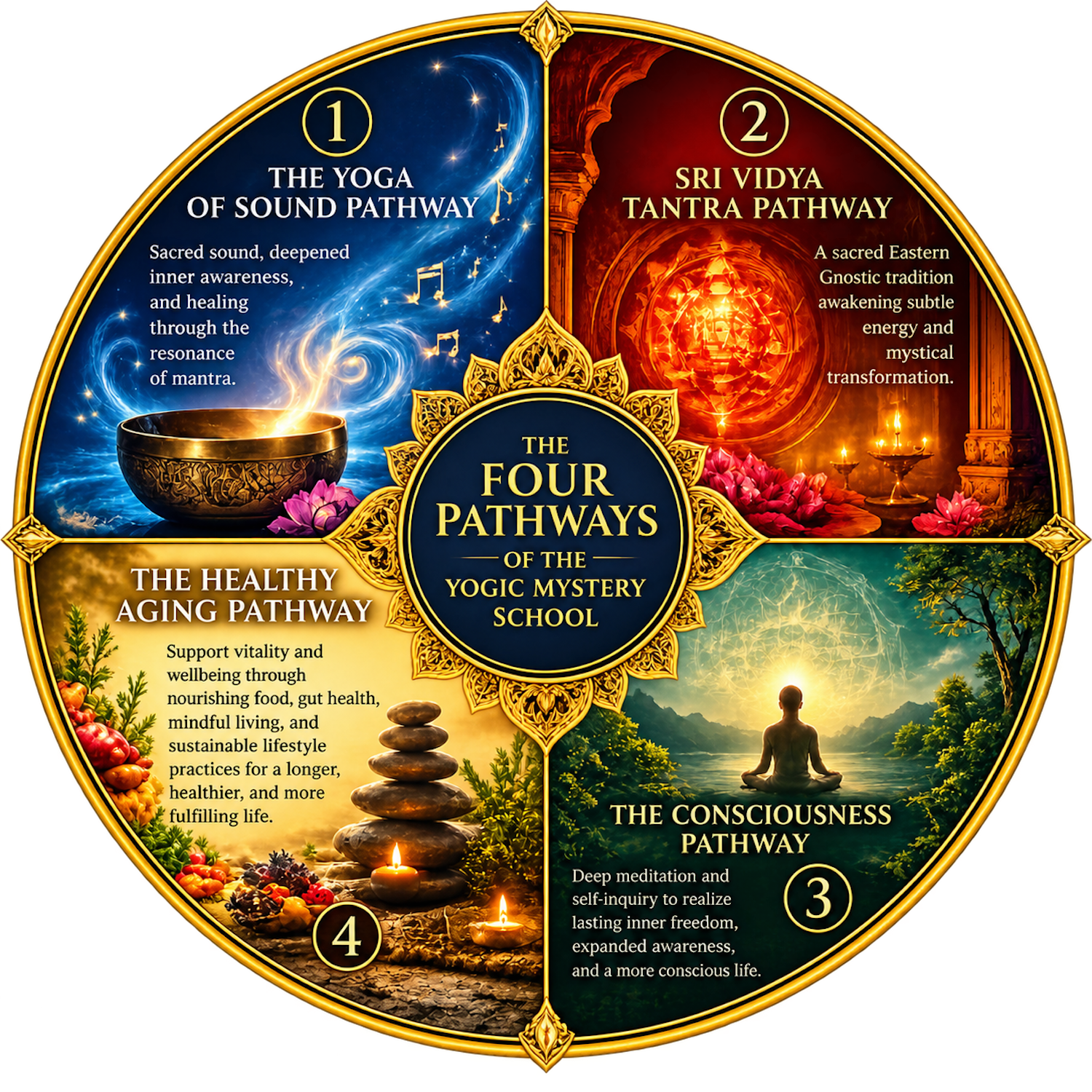
Singing as Meditation is one of the new tracks in our Yogic Mystery School annual theme, which is Fit Body Mindful Soul. Singing has benefits that are physiological, psychological, and spiritual.
Apart from the obvious spiritual benefits of singing Hindu devotional music, which results in elevated states of consciousness, our practice is exploring the connection between musical sound and our overall health, encompassing both physical and psychological aspects. I believe there’s a significant correlation between the two.
The significant impact of music on health and psychology is not only documented in thousands of years of the Yoga of Sound's development, but also from the contemporary work of Oliver Sacks and the earlier contributions of Don Campbell and Alfred E. Tomatis.
The following insights were shared impromptu when students started to arrive for the session and shared what they were planning to do during the session. You are welcome to listen to actual exchanges in the video...
Singing As Meditation

Indian music is essentially vertical in nature, meaning that it is internal and reflective of a drawing inward. Like the Eastern culture and religion, it is introverted. Eastern religions emphasize the importance of introspection and self-discovery, encouraging individuals to explore the inner reality and mystery of their being. Eastern music facilitates this process.
The power and beauty of this vertical music lie in melody, which is the relationship of successive notes. Melody is a means of connecting the human with the Divine. It operates through the psychic levels of an intermediate world that is difficult to define, as it transcends the boundaries of everyday existence and consciousness. It is a world of the unconscious, of dreams and deep moods, images and sounds, of the inner senses—those mystical dimensions of the human psyche that are either overdeveloped or underdeveloped in most of us.
Indian music, and all contemplative music, strives to balance these dimensions as it u...
Author-Educator and Musician-Producer

Russill Paul
Russill Paul is the author of The Yoga of Sound: Tapping The Hidden Power of Music and Chant and co-founder of Yogic Mystery School with his wife, Asha, an integrative health coach. He teaches internationally and online. They live in Austin, Texas.
Our New Cooking Club!
Develop a sacred kitchen as you also learn healthy recipes and healthy cooking methods.

Asha Paul is an educator, author, coach, and passionate cook who is deeply committed to promoting health and well-being. Passionate about helping others feel their best and age gracefully, she shares her knowledge through online teaching. Asha resides in Austin, Texas, with her husband, Russill.