The Living Field of Raga: Singing as Meditation
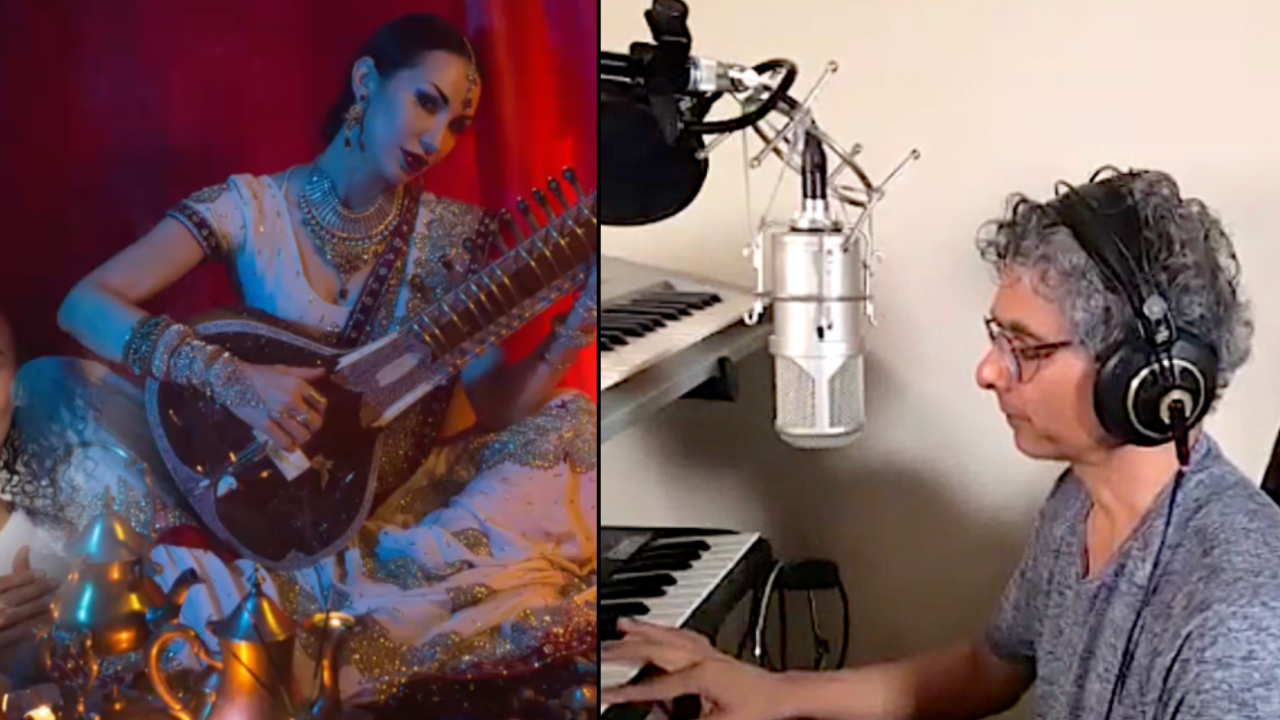
There is a way of singing that is not performance.
I often call it “Singing For God.”
This reflects its origins in Carnatic music, where composers sang in the temples of India—the very places we visited on pilgrimage.
At the same time, I understand that the word “God” can create distance for some.
So there is another way of entering this same process—
one that focuses on the inner experience that arises through musical knowledge and technique.
This is what I mean by Singing As Meditation.
It is not about becoming a better singer.
It is about becoming transparent enough
for something deeper to move through the voice.
It is a way of entering.
A way of allowing sound to shape consciousness
rather than using sound to convey something outward.
What Happens When Singing Becomes Meditation
When singing is combined with spiritual practice,
something begins to shift.
You are no longer “producing” sound.
You are participating in it.
And in that participation:
- Breath begins to organize itself
- The mind settles into pattern and flow
- Emotion refines into something more subtle
- And devotion—bhakti—begins to arise naturally
Not as an idea.
Not as an effort.
But as an experience.
This is why, in the traditional approach,
the voice is considered a direct extension of the soul.
Raga and improvisation.
Most people approach improvisation as creativity.
But in this tradition, improvisation is something very different:
It is the meeting point between
structure and surrender.
Too much structure… and the expression becomes mechanical.
Too much freedom… and it loses authenticity.
So the question becomes:
How do we remain true to the tradition
while allowing something alive to emerge?
This is where the real work begins.
Working with Bhaja Govindam
We’ll are using a classic devotional composition:
Bhaja Govindam
Not simply to learn it…
but to enter it.
Through it, we discover:
- How a raga shapes emotional space
- How subtle movements between notes awaken bhakti
- How improvisation can remain anchored in tradition
- How devotion can arise through technique—not forced feeling
This last point is essential.
Because what many call “devotional singing”
is often just emotional expression.
But here, devotion is cultivated
through precision, listening, and inner alignment.
Whether you consider yourself a singer or not,
this work unfolds in stages:
1. Entering the Raga
You begin with simple note structures
that organize the breath and mind.
This alone can shift your state of consciousness.
2. Awakening Subtlety
You start to experience the hidden notes—
the bends and slides that give life to the sound.
This is where bhakti begins to emerge.
3. Entering the Flow
Ornamentation and improvisation arise—
not as performance, but as energetic movement.
A kind of inner activation through sound.
If this speaks to you, you might want to explore our online training.
→ Join Singing As Meditation →
Who This Is For
This is not limited to musicians.
If you are not a musician, your voice is already your instrument.
If you are a musician, this may transform how you relate to it.
This work is for those who:
- Want a deeper relationship with mantra
- Are drawn to devotional expression
- Are exploring the inner dimensions of sound
- Teach and want to bring authenticity into their offerings
- Sense that sound can be a path
A Different Kind of Improvisation
Improvisation is not freedom from structure.
It is freedom within structure.
When sound, form, and attention align, something shifts:
You are no longer creating.
You are receiving.
Author-Educator and Musician-Producer

Russill Paul
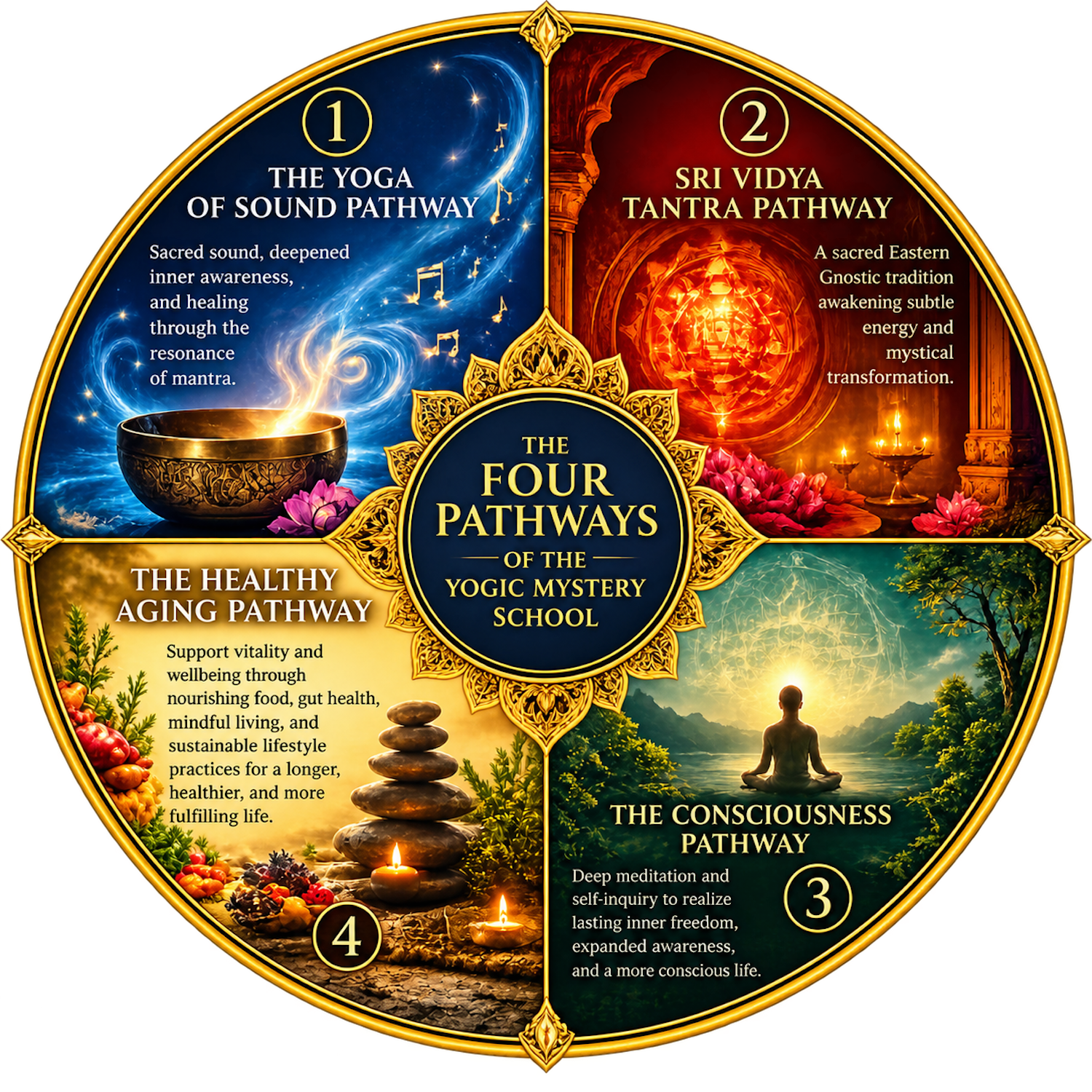
Russill Paul is the author of The Yoga of Sound: Tapping The Hidden Power of Music and Chant and co-founder of Yogic Mystery School with his wife, Asha, an integrative health coach. He teaches internationally and online. They live in Austin, Texas.
Our New Cooking Club!
Develop a sacred kitchen as you also learn healthy recipes and healthy cooking methods.

Asha Paul is an educator, author, coach, and passionate cook who is deeply committed to promoting health and well-being. Passionate about helping others feel their best and age gracefully, she shares her knowledge through online teaching. Asha resides in Austin, Texas, with her husband, Russill.