Diwali: Meaning, Practice & Attention
Three short reflections on bringing the wisdom of Diwali and Lakshmi into everyday life.
Diwali is a time of celebrating light, auspiciousness, and abundance. Yet the deeper significance of these traditions need not be confined to a particular festival or time of year.
For those of us who seek to integrate ancient spiritual wisdom into contemporary life, two important questions arise: What do these traditions mean to us personally, and how do we translate that meaning into actual spiritual practice?
In these three short videos, I explore how we can move from understanding the symbolism of Diwali toward developing a more intentional relationship with our attention, energy, and aspirations.
1. Finding Personal Meaning in Diwali
Lakshmi and More — Video 101
Diwali holds profound cultural and religious significance for Hindus. Associated with Lakshmi, the goddess of auspiciousness and abundance, it also celebrates the triumph of light over darkness through the story of Lord Rama.
But what if we did not grow up within these traditions?
We can appreciate their beauty and symbolism, but how do we move beyond cultural appreciation toward something that becomes personally meaningful?
This is where our exploration begins: with a genuine interest in discovering meaning rather than simply adopting unfamiliar customs.
A Question for Reflection
What does the triumph of light over darkness mean in your own life at this particular time? Is there something you would like to illuminate, understand more deeply, or transform?
2. Moving from Meaning to Method
Lakshmi and More — Video 102
Finding meaning is an important beginning, but spiritual traditions also offer methods for translating our aspirations into lived experience.
In yoga, we speak of sādhana, a sustained spiritual practice. In Tantra, upāsanā involves cultivating attentiveness toward that which we seek to approach, invoke, or realize.
The teachings associated with Lakshmi offer methods for working with manifestation and abundance, while traditions associated with Lord Rama invite contemplation of light, dharma, healing, and righteousness.
The important question is not simply what we believe or desire, but how we organize our attention and practice around what matters to us.
A Question for Reflection
Think of something meaningful you would like to cultivate in your life. Have you developed a consistent practice that supports this aspiration, or does it remain primarily an intention?
What might help you bridge that distance?
3. Learning to Sustain Our Attention
Lakshmi and More — Video 103
We often hear that wherever we place our attention, our energy follows. Yet establishing an intention is only part of the process.
The greater challenge is dealing with the distractions and disturbances that repeatedly interrupt our attention.
This is where yoga and Tantra offer practical methods.
The cultivation of dhāraṇā, or concentration, helps us develop the capacity to remain attentive to a chosen object or purpose rather than continually scattering our energy.
Whether we are working with mantra, meditation, a personal aspiration, or a spiritual discipline, the ability to sustain attention becomes essential.
A Question for Reflection
What most frequently distracts you from the things you genuinely value?
Rather than trying to strengthen your intentions, consider what might happen if you began reducing the distractions that prevent you from following through on them.
Bring The Reflections into Your Life
These three reflections suggest a simple progression:
Meaning gives us direction. Practice gives us a method. Sustained attention allows the practice to deepen.
You might spend a few minutes today considering which of these three dimensions needs the most attention in your own life.
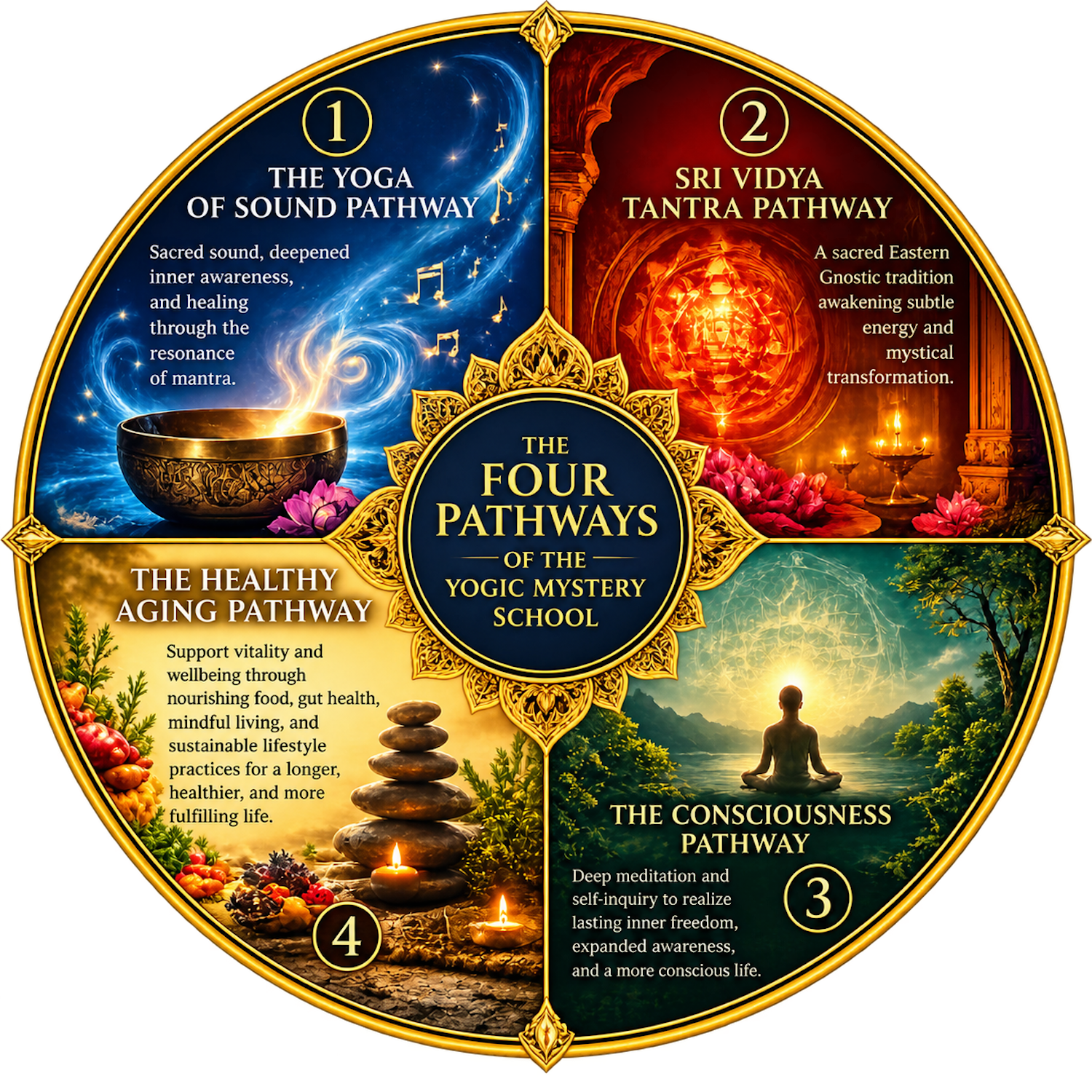
At the Yogic Mystery School, we explore these principles through traditional mantras, meditation, sacred ritual, and the practices of Sri Vidya Tantra.
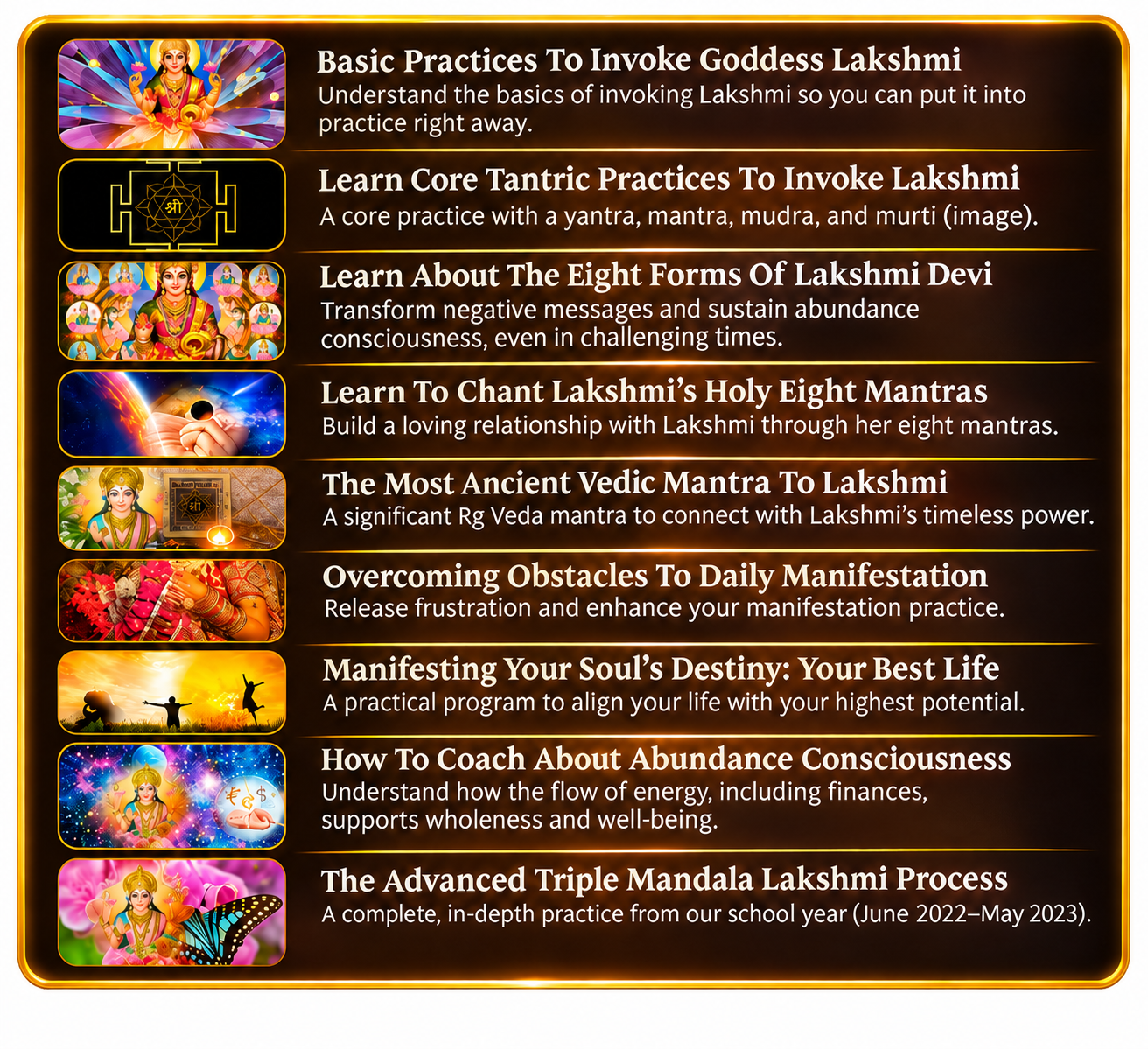
For those interested in learning more about Lakshmi and the spiritual disciplines associated with her, I've created a short introduction that also provides access to our more extensive teachings and programs.
Go Deeper Into The Process Of Lakshmi Tantra
Lakshmi: Cultivating Abundance Consciousness
May the light we celebrate during Diwali continue to illuminate the ways we live, practice, and engage with the world throughout the year.
Author-Educator and Musician-Producer

Russill Paul
Russill Paul is the author of The Yoga of Sound: Tapping The Hidden Power of Music and Chant and co-founder of Yogic Mystery School with his wife, Asha, an integrative health coach. He teaches internationally and online. They live in Austin, Texas.
Our New Cooking Club!
Develop a sacred kitchen as you also learn healthy recipes and healthy cooking methods.

Asha Paul is an educator, author, coach, and passionate cook who is deeply committed to promoting health and well-being. Passionate about helping others feel their best and age gracefully, she shares her knowledge through online teaching. Asha resides in Austin, Texas, with her husband, Russill.