CREATIVE COLLECTIVE
Navaratri 2026: Nine Forms of Durga
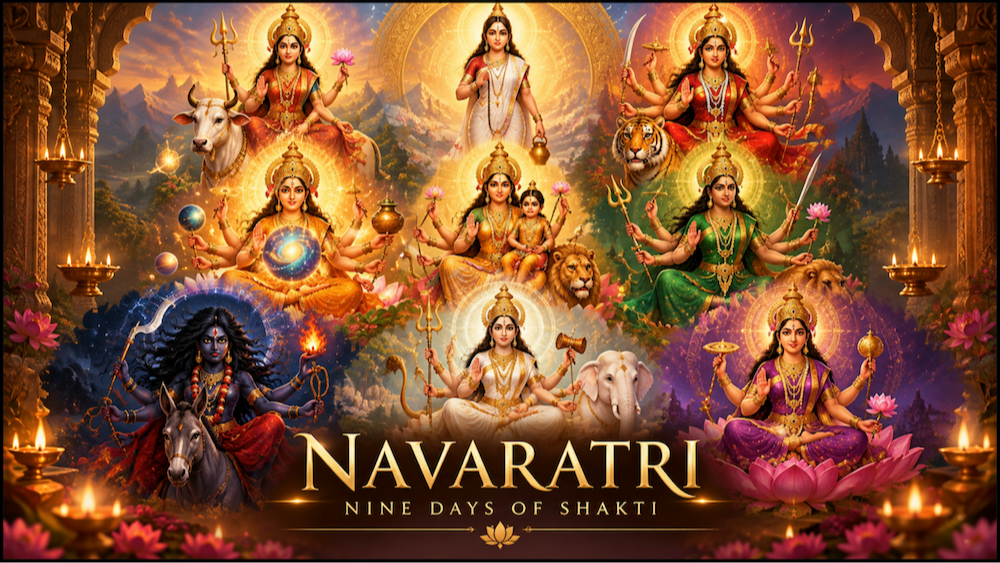
This year, 2026, Navaratri begins on Sunday, October 11 and ends on Tuesday, October 20th. You can watch my video message to orient yourself and then read the short descriptions for each day below.
If you would like my guidance during these nine days to take a deep dive into Navaratri and tap the mysterious power of Durga through various practices, click here to be Transformed By Fire.
During Navaratri, I invite you to become aware of nine aspects of Shakti, each traditionally venerated on a particular day. Each manifestation reveals a distinctive power of the Divine Feminine that we can invoke in our lives.
ŚAILAPUTRĪ — Sunday, October 11
The Daughter of the Mountains rides Shiva's bull, symbolizing unwavering dedication. She holds Shiva's trident, representing transformative power, and a lotus, symbolizing the flowering of spiritual awareness. Invoke her for strength and power.
BRAHMACĀRIṆĪ — Monday, October 12
This austere Shakti walks barefoot and unadorned, carrying a ru...
Early Morning Practice: An invitation into the quiet
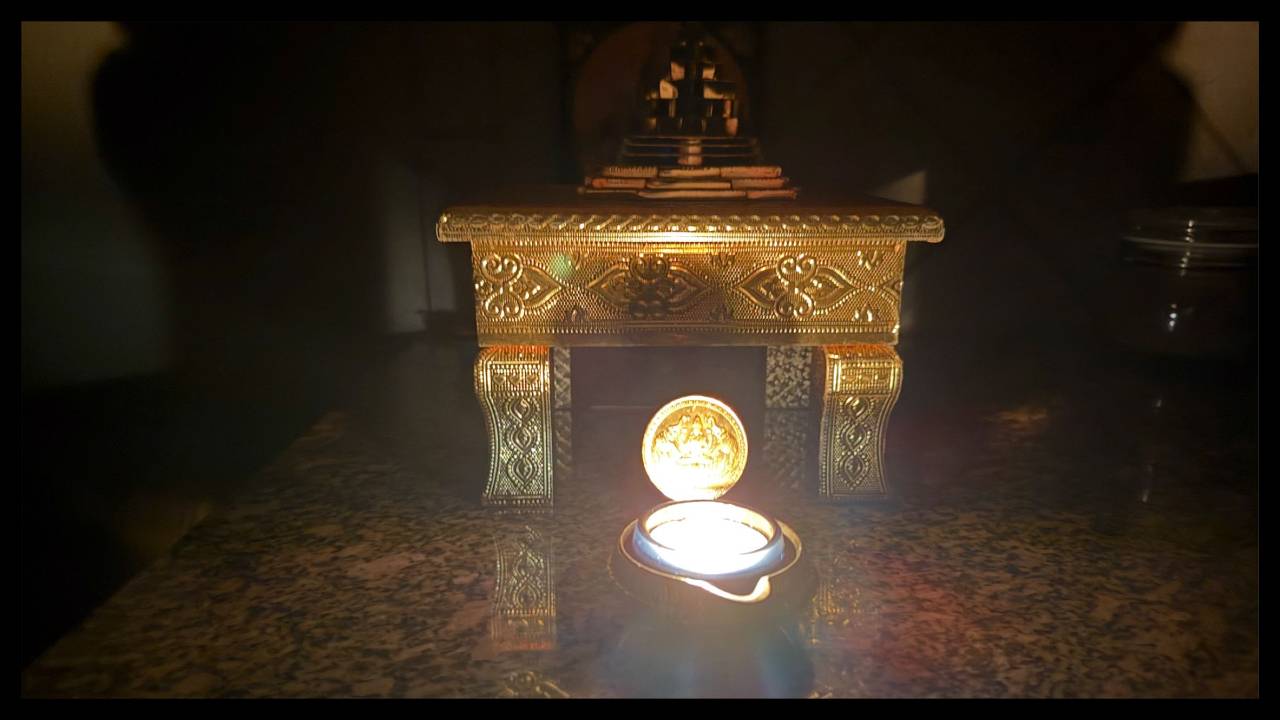
I wanted to share something quite personal: a glimpse into my own early-morning practice.
This is not meant as a teaching about practice so much as an invitation into the practice itself. The atmosphere is difficult to capture on video—the darkness, the quiet, the lighting of the lamp, the incense, and that gradual movement from the activity of the mind toward stillness and presence.
Sit in front of your own altar or look out a window seated in a comfortable chair.
For me, the altar is a kind of external portal. The real portal is within—behind the eyelids, within the heart, deep within the belly. But when the mind is filled with thoughts and the body with feelings, a simple ritual can help turn us toward something beyond ourselves.
The heart of this practice is the Core Mantra.
I return to it during the night, in the early morning, and throughout the day—not simply to repeat a mantra, but to interrupt the relentless movement of thought, create space within my...
Core Mantra | Its Essential Purpose

Recently, a good part of our interactive group Mantra Master Class sessions on Zoom was dedicated to our Core Mantra Practice, which we’ve all been exploring together.
Here are some of the teachings that have been shared. Students also have access to tutorials, conversations with students, and posts on my own present-day discoveries with the Core Mantra Practice.
Join our Mantra Master Class Series
What Is the Core Mantra Actually For?
The idea of a core mantra has been central to the Yoga of Sound for many years. Yet as our practice develops—and as we ourselves change—it is valuable to return periodically to a very basic question:
What is the core mantra actually for?
Over time, we can easily begin to use a mantra for many different purposes. We may turn to it because we want peace, grounding, emotional regulation, protection, reassurance, healing, or clarity.
All of these may be legitimate benefits of mantra practice. But they are not, in themselves, the essential purpose of t...
External Sound To The Internal Mantra
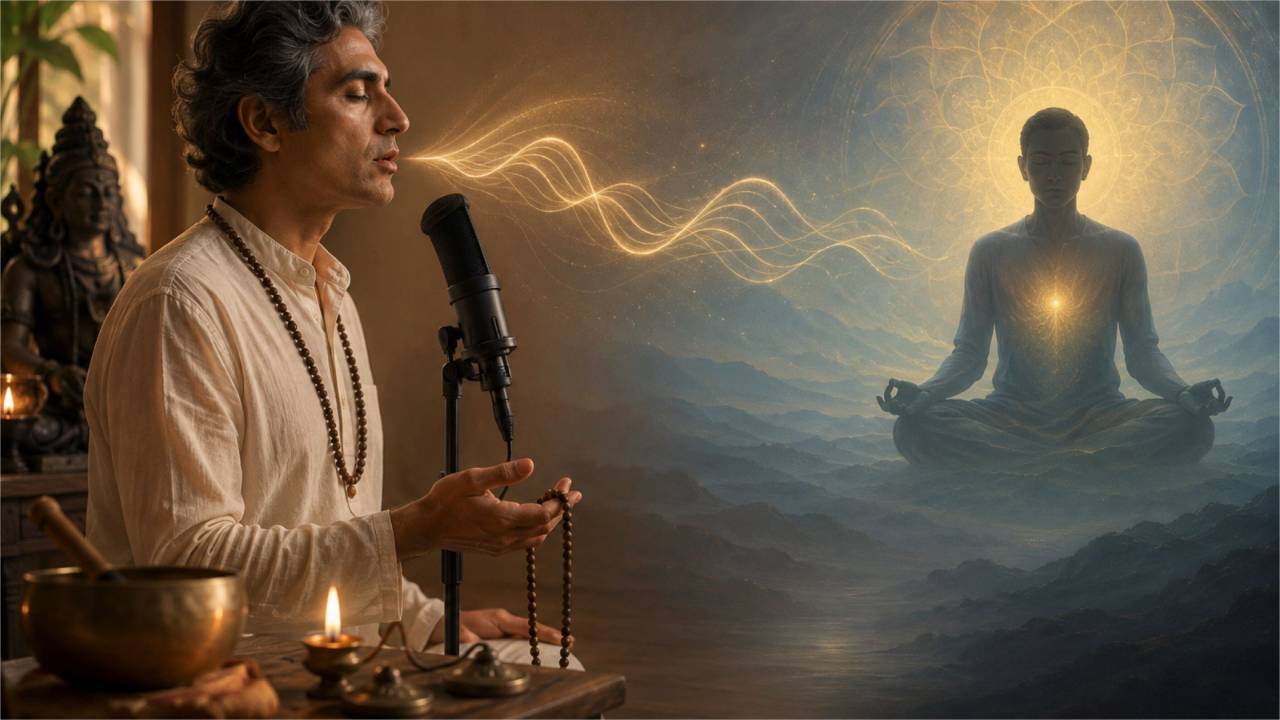
Why the Voice Matters in Mantra Practice
There is a natural tendency, particularly as our spiritual practice matures, to value what is internal over what is external. Silence seems deeper than sound. Mental repetition seems subtler than vocal repetition. We may therefore assume that repeating a mantra silently in the mind represents a more advanced form of practice than saying it aloud.
There is certainly truth in this. When we become quiet and still, we begin working more directly with the subtle vibrations of thought, imagination, memory, and intention. Mental repetition—japa—can become an extraordinarily powerful means of gathering the mind and directing consciousness.
But there is another side to this that deserves our attention.
What exactly are we hearing when we repeat a mantra internally?
For most of us, it is not an abstract or disembodied sound. We have internalized a voice. And very often, that voice is our own.
This is why external mantra practice can play such an ...
Mystery School Update: August 2026
This month, as we return to Singing As Medicine, I would like to invite each student to choose a singing project that develops their devotional voice. I especially recommend Bhaja Govindam so that we can create another tapestry project together, although you are, of course, free to choose any piece that inspires you.
However, we also introduce something new, which is consciously integrating the Kundalini experience into our Singing As Medicine journey. With that in mind, we will begin introducing the chakras into our work by drawing from our Chakra Immersion. We will also begin integrating the Tantric path through The Mystery of Ganesha, gradually weaving these dimensions into our singing process.
We meet for both Singing As Medicine and the Creative Collective on August 15. Since everyone is quite involved with developing their 60-day Mantra Practice, I suggest li...
A 60-Day Mantra Practice

When Your Practice Becomes Fragmented
There comes a point on every spiritual path when another teaching, another book, another mantra, or another meditation technique no longer satisfies us in the way it once did.
This isn't a sign that something is wrong.
It is often a sign that something deeper is trying to emerge.
When we first begin our spiritual journey, everything feels new. We are delighted by each discovery, inspired by every practice, and nourished by every glimpse of something greater than ourselves. We collect experiences much as children collect treasures, each one opening another door.
Over time, however, something changes.
Our library grows.
Our courses accumulate.
Our understanding expands.
Yet our daily practice often becomes smaller.
Many sincere practitioners find themselves surrounded by extraordinary spiritual resources—not to mention the vast amount of spiritual material now freely available on the internet—while struggling to maintain a consistent relati...
A Spiritual Makeover: Renew Your Relationship with the Divine

There is a subtle danger that accompanies every sincere spiritual journey.
It doesn't arrive at the beginning. It usually arrives years later.
After we've attended the retreats, read the books, practiced meditation, chanted the mantras, prayed the prayers, and explored the world's wisdom traditions, something unexpected can happen.
Our spiritual life becomes familiar.
The practices remain. The vocabulary remains. The understanding remains. Yet somewhere beneath the surface, the freshness that first drew us to the spiritual path begins to fade.
The danger isn't that we stop practicing.
The danger is that we stop growing.
A tree that is alive continues to grow. A healthy relationship continues to deepen. A living faith continually reveals new dimensions of itself. Why should our spiritual life be any different?
Many people assume that growth comes from learning another technique.
A new meditation.
Another mantra.
Another retreat.
Another book.
There is certainly value in al...
The Functional Value of Mantra Types
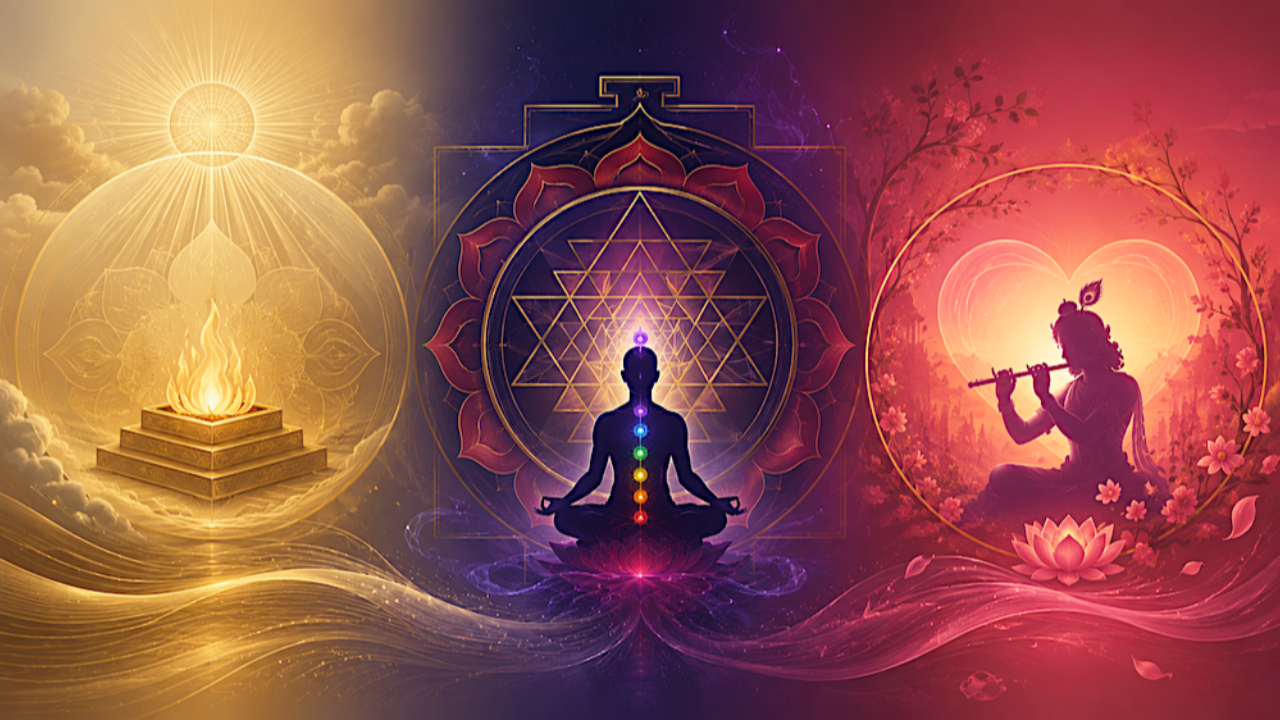
Most people think of mantra as a single practice—a sacred phrase repeated in meditation, prayer, or yoga. Yet within the authentic Yoga of Sound tradition, mantra is far more nuanced. Just as different medicines serve different purposes, different mantras awaken different dimensions of our being.
Three Paths, Three Functions
In the Yogic Mystery School, we study three primary streams of mantra: Vedic, Tantric, and Bhakti. Each has its own purpose, method, and transformational effect. Learning to recognize these distinctions can completely change the way you experience mantra practice.
Vedic Mantras: Aligning with Higher Consciousness
Vedic mantras are among humanity's oldest sacred sounds. Traditionally chanted with precise tonal patterns, they are designed to align the individual with cosmic intelligence and universal order.
Rather than expressing emotion, Vedic mantras cultivate clarity, steadiness, and higher awareness. They invite us beyond the personal mind into a state of pr...
Inside the Creator's Studio: How Mantras Become Music
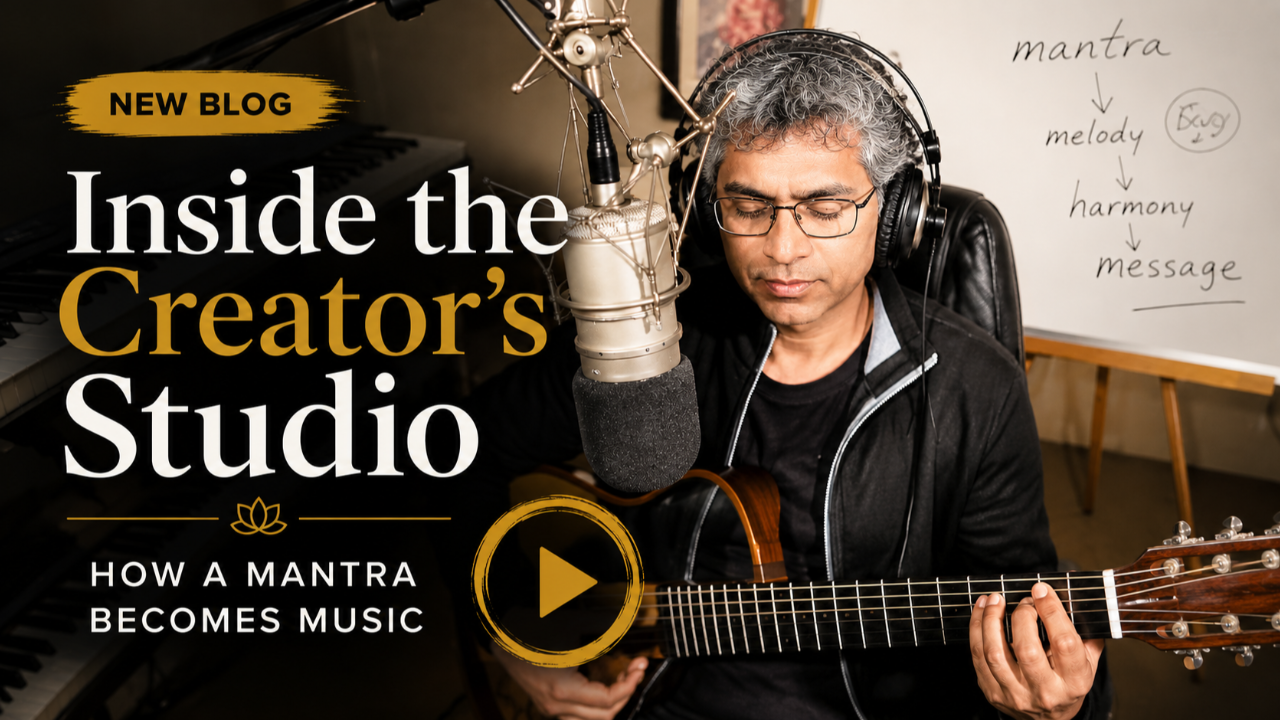
Most people encounter a mantra only after it has become a finished recording, a polished chant, or a sacred song. What is rarely seen is the creative journey that unfolds before the final version ever reaches the listener.
Recently, I shared a video called Inside the Creator’s Studio, drawn from one of the many exploratory sessions that eventually contributed to my recording of Lokah Samastah Sukhino Bhavantu. While the finished track may appear seamless and inevitable, the reality is that sacred music often emerges through a process of listening, experimentation, questioning, and discovery.
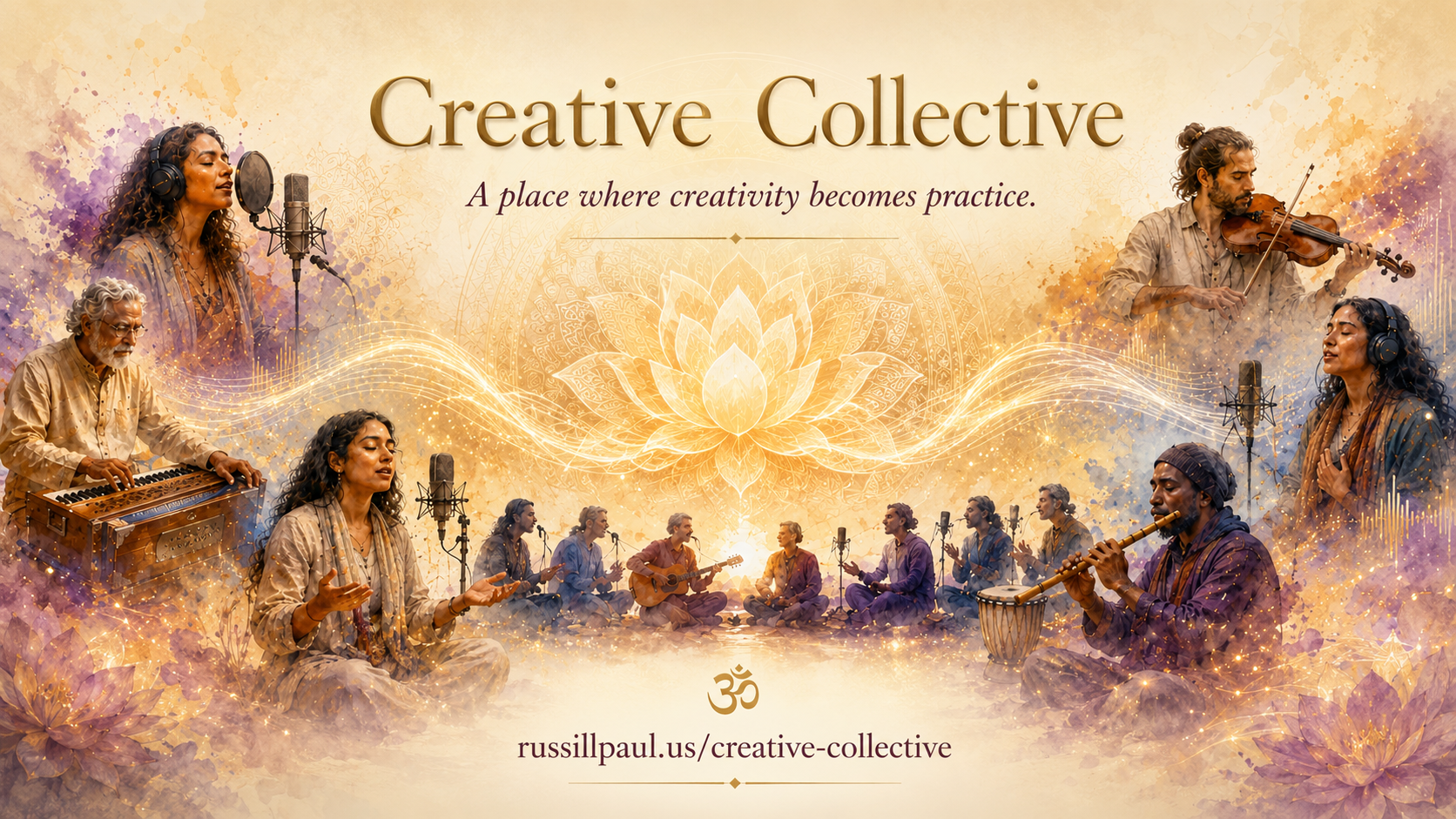
This creative process is one of the things we explore together in the Creative Collective.
Beyond Repetition: The Creative Life of Mantra
Many people think of mantra as something fixed and unchanging—a sacred formula to be repeated exactly as it has been handed down. While there is certainly a place for preserving traditional forms, there is another dimension that is often overlooked.
Once a m...
The Power Of A Single Tone

This past Saturday, we gathered on Zoom for our first Singing As Medicine training. Rather than beginning with songs or melodies, we began with something much simpler—and, in many ways, much more profound: a single sustained tone.
For many people, voice training means learning scales, improving technique, or developing confidence in singing. In the Yoga of Sound tradition, however, the voice is also a doorway into awareness. Before we concern ourselves with expression, we learn to listen. Before we seek beauty, we seek presence.
This is why the practice begins with one note.
Returning to the Foundations
One of the interesting discoveries I've made over more than three decades of teaching is that even advanced students often benefit from returning to the fundamentals. As we learn more sophisticated methods, it becomes easy to lose touch with the simple practices that quietly support everything else.
Working with a single tone develops much more than vocal ability. It invites us to ...
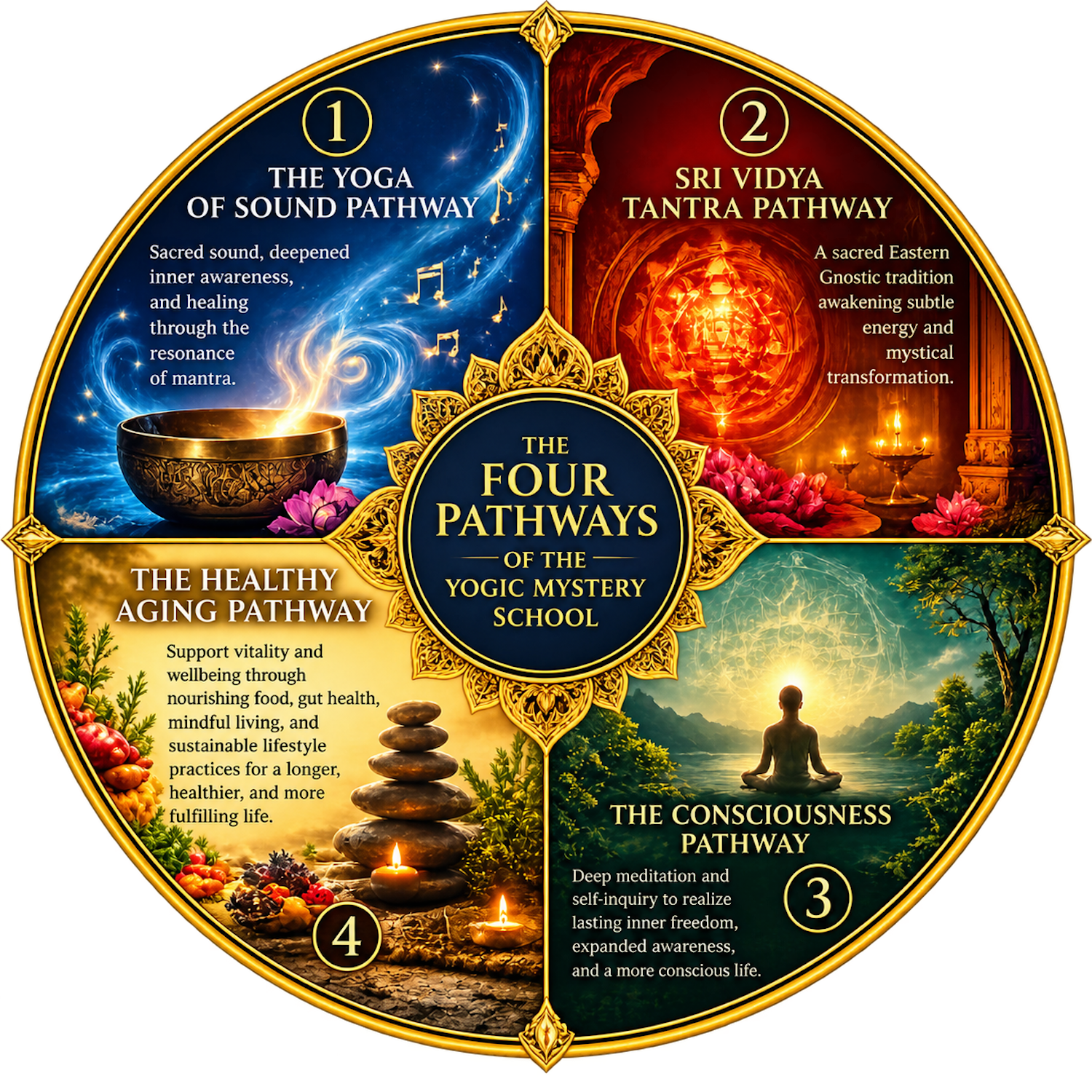
Author-Educator and Musician-Producer

Russill Paul
Russill Paul is the author of The Yoga of Sound: Tapping The Hidden Power of Music and Chant and co-founder of Yogic Mystery School with his wife, Asha, an integrative health coach. He teaches internationally and online. They live in Austin, Texas.
Our New Cooking Club!
Develop a sacred kitchen as you also learn healthy recipes and healthy cooking methods.

Asha Paul is an educator, author, coach, and passionate cook who is deeply committed to promoting health and well-being. Passionate about helping others feel their best and age gracefully, she shares her knowledge through online teaching. Asha resides in Austin, Texas, with her husband, Russill.